How do I get started?
Getting started with artificial intelligence does not have to be complicated or time-consuming. Many companies know that AI will play an important role in the future, but at the outset they face very concrete questions: Where is the right starting point? Which processes are suitable? Which data may be used? And how can it be ensured that an AI solution not only works technically, but also really supports day-to-day work?
Vimmera AI accompanies companies precisely at this point. The entry does not begin with finished software or an abstract technology decision, but with an understanding of your organization, your tasks, and your existing knowledge base. The goal is to define a clear, controllable, and sensible first step.

Do not start with the technology, but with the benefit
A successful AI introduction rarely begins with the question of which system should be used. More important at first is the question of which problem should be solved. Where do employees lose time today? Where is information searched for, checked multiple times, or compiled manually? Where do follow-up questions, uncertainties, or recurring tasks arise?
Suitable areas of application emerge from these observations. This can be an internal knowledge assistant, support in customer service, a solution for document analysis, or a system that prepares employees for specialist decisions. The decisive factor is that the first use case is clearly defined and offers a recognizable benefit.
The first step: creating orientation
At the beginning, Vimmera AI analyzes together with you which requirements, data sources, processes, and framework conditions are in place. The aim is not to automate everything right away. Rather, the focus is on identifying where AI can be used safely, understandably, and in a controlled manner.
Typical questions in this phase are:
Which information should be made usable?
Who may access which content?
Which tasks should be made easier?
Which results must be traceable?
Which legal, organizational, and technical requirements must be observed?
On this basis, a realistic picture emerges of what is sensibly possible and which entry point suits your company.
Start small, learn in a targeted way, expand in a controlled manner
Vimmera AI recommends starting with a clearly defined use case. This makes it possible to gather experience, check quality, and build acceptance within the company. A small, well-chosen starting point is often more effective than a large project without a clear direction.
After the first deployment, the solution can be expanded step by step. New data sources, additional departments, extra functions, or more complex processes can be added once the foundation is stable. In this way, AI is introduced not as a short-term experiment, but as a growing work tool that is oriented toward the needs of the company.
You do not need to be an AI expert
To get started with Vimmera AI, companies do not need their own AI specialists or a finished technical strategy. What matters most is the willingness to look at existing processes and jointly determine where intelligent support makes sense.
Vimmera AI takes on the professional and technical assessment, develops suitable solution concepts, and ensures that security, data protection, usability, and traceability are taken into account from the very beginning.
An idea becomes a usable system
The path to your own AI solution begins with a conversation. It is about your goals, your challenges, and the question of where AI can create real added value in your company. From this initial assessment, a concrete proposal for the next steps emerges.
This turns a general idea into a structured entry point: understandable, controllable, and aligned with the actual requirements of your company.
The best start is a clear first step
AI does not have to change everything immediately. It should begin where it relieves people, makes knowledge accessible, and better prepares decisions. Vimmera AI helps companies take this first step safely and develop it into a long-term viable solution.
Company GPTs, meeting assistants, and document managers
You have certainly already heard of ChatGPT. Or of Claude and Gemini. Perhaps you have even tried these systems yourself. One of your colleagues certainly has.
These systems can already achieve a great deal in a company. Formulate emails better, summarize documents, or conduct research.
That is already a small AI introduction in the company.
If this is then implemented in a GDPR-compliant and data-protection-correct way…, why not!
Or another idea: you surely have meetings from time to time, hold (sales) conversations, or sit in training sessions and further education courses. Do you take notes? Do you have someone who takes notes? Or do you really remember everything?
AI also offers unexpected possibilities here:
Meetings, (sales) conversations, training sessions, or other gatherings with other people can be recorded and transcribed (so to speak, written down). Afterwards, AI can create summaries, minutes, or task lists. -Without a single person having written anything down. In seconds, the team is informed or the customer has their transcript.
Or even better: do you still write manuals, instructions, or expert reports?
Let AI take over this work! Not like ChatGPT (“write this text as an email…” or “create an instruction from this…”), but with your own syntax, in the company’s corporate style, and with the technical terms you actually use. -Indistinguishable from your own documents or written materials.
These tools are virtually available immediately and without much effort. -Only small adjustments need to be made (e.g. teaching your syntax, technical terms, and writing styles), and then you can get started.
That is AI in your company.
And from there, it continues step by step.
Marketing campaigns, accounting, knowledge management, and customer service. All of this is quick and easy to implement. Not all at once. But one after the other. Organized, secure, and thorough.
And that was just one idea among many possibilities…!

Concerns about AI in the company
Artificial intelligence opens up new possibilities for companies. At the same time, entirely legitimate questions arise. What does all of this cost? How long does implementation take? Does AI really work reliably? What happens to my data? How do employees react? And is the effort ultimately even worth it? These questions are not disruptive. They […]

How much do solutions from Vimmera cost?
One of the most common questions we get is: What does an AI solution from Vimmera AI cost? Our honest answer is: This can only be answered seriously once we know your company and your requirements. Because Vimmera AI does not offer off-the-shelf solutions. We develop and operate AI systems that are aligned with your […]

Why many people are skeptical about AI
Artificial intelligence is everywhere. In the news, on social media, in new tools. And it often sounds as if AI is suddenly going to change everything. No wonder many people react skeptically at first or even become afraid. Typical thoughts and concerns include, for example: These questions are not exaggerated. They are human. And they […]

Successfully introducing artificial intelligence in the company
The secret behind a successful introduction of artificial intelligence in companies Many companies begin introducing AI with high expectations. They take the first steps and implement systems, yet still experience no noticeable success. Productivity does not increase as planned, employees accept the new solutions only hesitantly and ultimately make little use of them. Time, budget, […]
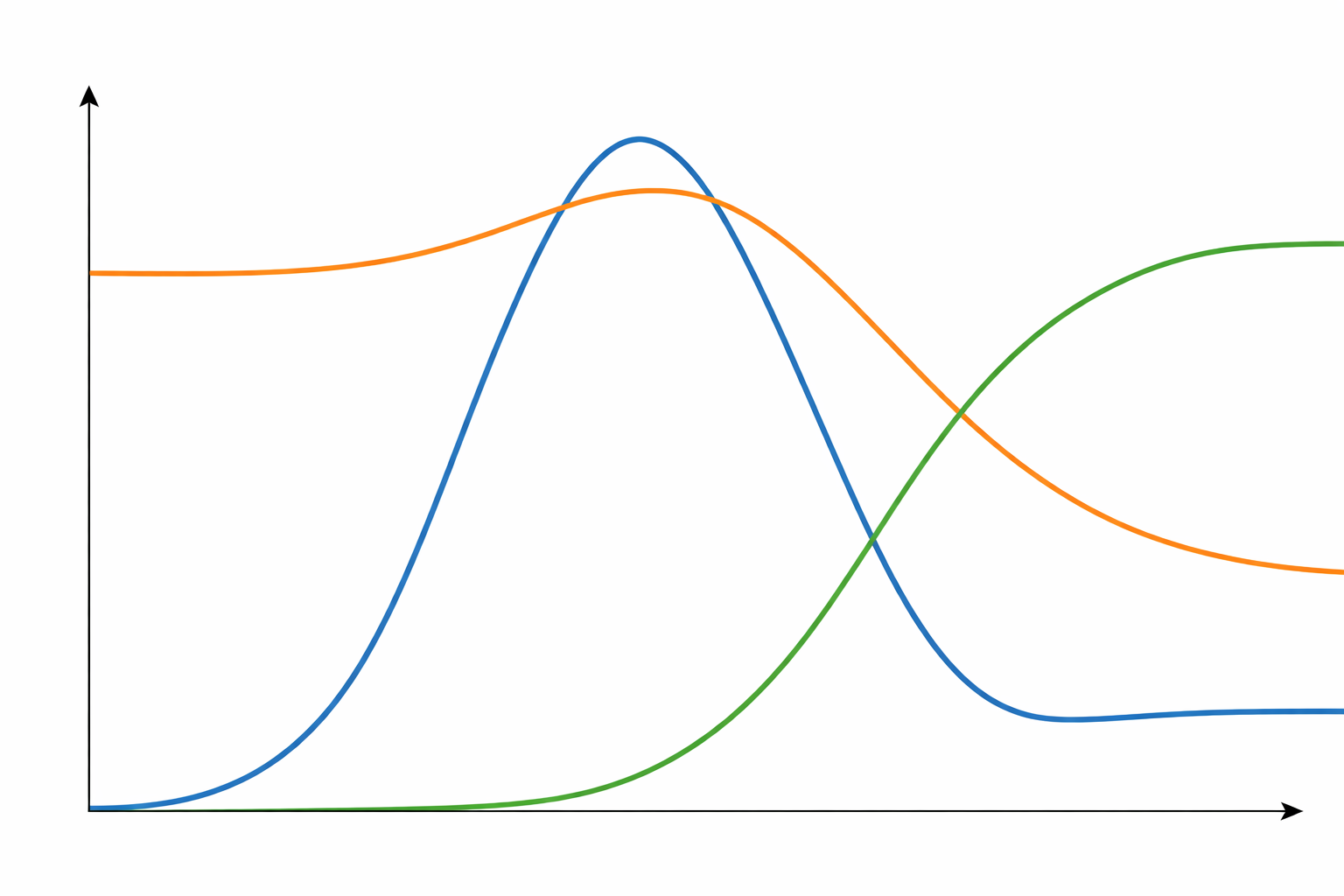
Time until AI success
Many companies associate AI with the expectation that relief will occur immediately after implementation and that productivity will noticeably increase. In reality, however, this effect usually does not appear immediately after the launch. AI is rarely a “switch” that is flipped and reliably saves time from day one. Rather, the benefit arises gradually, as a […]

This is how our AI works for you
Artificial intelligence should serve as a reliable work tool: understandable in its use, easy to operate in everyday work, and built on the knowledge of the company itself. Vimmera AI develops systems for this purpose that work with verified, company-specific information and give employees easy access to relevant knowledge. This creates better conditions for well-founded […]
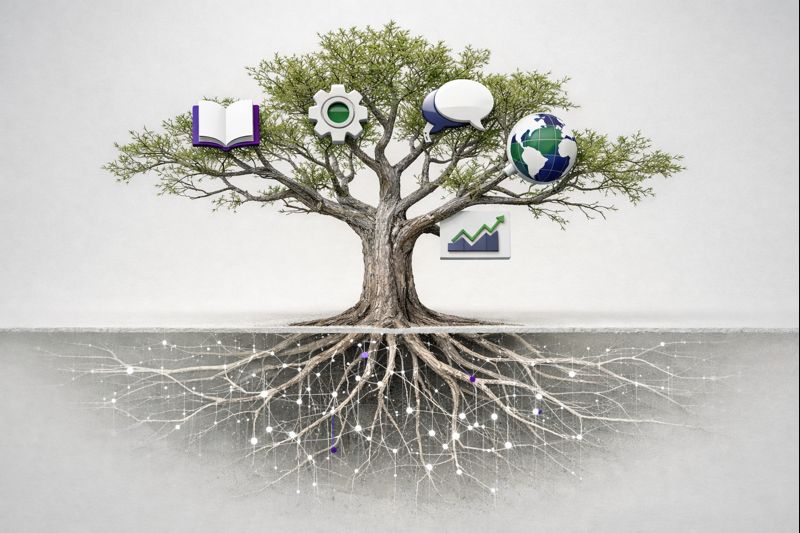
Scaling and Growth
The systems of Vimmera AI are designed to grow with the company. Organisations do not have to start big to be successful in the long term. On the contrary: it is often sensible to begin with a clearly defined use case, gain experience, make the benefits visible, and then expand step by step based on […]