Prices & Costs
Transparent guidance for your AI project
AI projects can rarely be priced as a flat rate, because scope, technical requirements, and data basis vary greatly from company to company. Our price overview therefore shows you which cost components you can generally expect and how a project is typically structured.
The total costs are made up of the appropriate software license, possible services for setup, customization, or data preparation, as well as usage-based fees for AI models, storage, or data access.
Which components are actually relevant depends on your specific use case.
This gives you a clear overview in advance, without forcing your project into a rigid package. We will prepare a binding offer after an initial conversation, once requirements, data situation, desired functions, and technical effort can be realistically assessed.
If you have any questions about our prices, please feel free to contact us at any time.
Our offer is aimed at business customers, therefore our prices are to be understood in euros (€), net plus statutory taxes.
Software licenses
Which software license is right for your company depends primarily on how you want to use AI.
For a quick start, smaller teams, and clearly defined applications, Vimmera Now is usually the right choice. If you want to integrate AI permanently into business processes, use multiple assistants, knowledge bases, role models, usage statistics, or scalable extensions, Vimmera Studio is better suited. In a joint discussion, we will clarify which platform fits your goals, your number of users, your data, and your security requirements.
Vimmera Now
The entry into secure enterprise AI.
Vimmera Now is suitable for companies that want to get started quickly with AI assistants, knowledge bases, and simple AI tools. The platform includes the most important basic functions of Vimmera Studio, but with a reduced scope of performance.
€39.00 / month
Included:
- 1 included user
- Up to 10 users per company account
- Updates, server operation, and software maintenance
- Chat history up to 50 threads per user
- Max. 30 days retention period for chat history (the legal retention obligations in the background, without visibility for the user, are excluded from this)
- Up to 5 GB storage usage for chat history
- Enterprise GPT included (plus usage-based fees)
- Hosting in Europe or by individual arrangement
Optional extensions:
- Additional user: €39.00 / month
- Setup per user: €99.00 one-time
- Vimmera Cortex: €39.00 / month per Cortex
- Vimmera Assist: €39.00 / month per Assist
- Vimmera Tool: €39.00 / month per Tool
- Vimmera Webchat (chatbot for intranet or internet): €69.00 / month per Webchat
- Additional storage for chat history: €9.00 / month per 10 GB
- Additional Cortex storage: €9.00 / month per started 1 GB
Note: When using AI systems (e.g. Assist, Tools, Webchats,…) usage-based fees are incurred (see below) which are not included in the license costs.
Vimmera Studio
The scalable platform for custom AI systems, company knowledge, and scalable AI processes.
Vimmera Studio is the central software platform for AI systems, assistants, knowledge bases, and tools from Vimmera AI. The platform is suitable for companies that need multiple users, structured knowledge work, custom AI assistants, usage statistics, role models, and expandable AI processes.
€499.00 / month
Included:
- 5 included users
- Unlimited maximum number of users
- Updates, server operation, and software maintenance
- 1 Vimmera Cortex included (plus any customization and data preparation costs)
- 3 custom Vimmera Assist included (plus any customization costs)
- 3 custom Vimmera Tool included (plus any customization costs)
- Usage statistics included
- Maximum and minimum retention period for chat history according to legal requirements or individually configurable
- 10 GB storage for chat history included
- Unlimited number of Vimmera Assist, Vimmera Cortex, and Vimmera Tools possible
- Enterprise GPT included (plus usage-based fees)
- Meeting assistant (Vimmera Meeting Tool) included (plus usage-based fees)
- Translation Studio (AI translations) included (plus usage-based fees)
- Transcribe (transcription tool) included (plus usage-based fees)
- Hosting in Europe or by individual arrangement
Optional extensions:
- Additional user: €29.00 / month
- Each additional Vimmera Cortex: €39.00 / month
- Each additional Vimmera Assist: €39.00 / month
- Each additional Vimmera Tool: €39.00 / month
- Vimmera Webchat (chatbot for intranet or internet): €69.00 / month per Webchat
- Additional storage for chat history: €9.00 / month per 10 GB
- Additional Cortex storage: €9.00 / month per started 1 GB
Price tiers:
For companies with many users, assistants, tools, or Cortexes, we offer tiered pricing. We would be happy to discuss the options and exact pricing tiers with you.
Note: The software licenses do not include any individualizations or customizations in the price. Adjustments, customizations, data preparation, or other services are billed separately.
The license for Vimmera Webchat (chatbot for intranet or internet) also includes the provision of the JavaScript code for a chatbot UI. Technical integration into the website, adjustments to CMS, consent or tracking systems, as well as design adjustments are not included and are offered separately.
Note: When using AI systems (e.g. Assist, Tools, Webchats,…) usage-based fees are incurred (see below) which are not included in the license costs.
Comparison: Vimmera Now and Vimmera Studio
| Function | Vimmera Now | Vimmera Studio |
|---|---|---|
| Monthly price | 39,00 € | 499,00 € |
| Included users | 1 | 5 |
| Maximum number of users | 10 | unlimited |
| Additional users | €39.00 / month | €29.00 / month |
| Meeting assistant | included | included |
| Enterprise GPT | can be added | included |
| GDPR and EU AI Act training assistant | can be added | included |
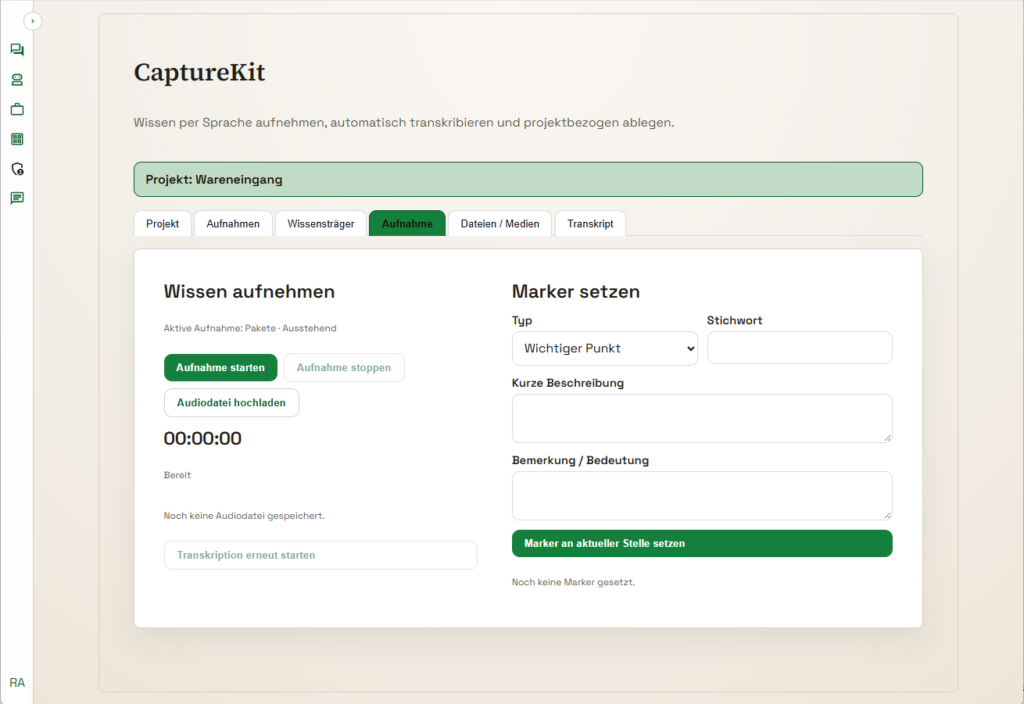
| Capture kit | included | included |
| Usage statistics | not available | included |
| Vimmera Cortex | can be added | 1 included |
| Incognito mode | not available | available |
| Vimmera Assist | can be added | 3 included |
| Web chat (chatbot for intranet or internet) | can be added | can be added |
| Tools | can be added | 3 included |
| Chat history | limited | extended according to specifications |
Note: When using AI systems (e.g. Assist, Tools, Web chats, …) usage-based fees are incurred (see below) which are not included in the license costs.
Services
For individual customizations, technical extensions, interfaces, data preparation and project-related implementations, we charge based on effort.
| Service | Billing | Net price |
|---|---|---|
| UI customizations, adjustments in Vimmera Studio and Vimmera Now, general customizations | per hour | 149,00 € |
| Data preparation, data verification, interface programming, data digitization, programming of vector store structures, prompt engineering, customization of Vimmera Assist, Vimmera Webchat, Vimmera Tools and data maintenance | per hour | 189,00 € |
Workshops & training
For the successful use of AI, careful preparation is crucial. In workshops, we analyze processes, identify suitable use cases, review existing data and prepare implementation.
In addition, we offer training and workshops on relevant framework conditions and possible applications, in particular on the GDPR, the EU AI Act, and the responsible and secure use of AI in companies.
| Content | Duration | Net price |
|---|---|---|
| Analysis meetings, training, data compilation and project preparation | 1 day / 8 hours | 1.650,00 € |
| Analysis meetings, training, data compilation and project preparation | 1/2 day / 4 hours | 950,00 € |
The price includes the necessary preparation and follow-up as well as documentation and materials, for example training materials or checklists.
Travel expenses are billed by individual agreement.
Usage fees for AI models, tools, data and web access
In addition to license and project costs, usage-based costs may arise. These depend in particular on the AI model used, the number of requests, the amount of data, image or audio processing, and the chosen infrastructure.
Typical usage-based costs:
- Text processing based on input, output and storage tokens (cached tokens)
- Access to Vimmera Cortex or vector stores
- Web searches (including on company websites)
- Code interpreter sessions
- Image analysis and image generation
- Video generation
- Audio transcriptions
- Realtime voice inputs
- Caching of thread or context information
As a guideline, token and usage costs are in the following ranges depending on the model:
| Usage | Guideline net |
|---|---|
| Input tokens | from €0.36 per 1 million tokens |
| Cached input tokens | from €0.10 per 1 million tokens |
| Cached output tokens | from €0.10 per 1 million tokens |
| Output tokens | from €2.45 per 1 million tokens |
| Code interpreter (code execution in the background) | from €0.05 per session |
| Web search | €17.45 per 1,000 web searches |
| Vector store access (or other tool calls) | €3.80 per 1,000 accesses (calls) |
| Audio upload / transcription | €0.02 per audio minute |
| Realtime audio input | €0.04 per audio minute |
| Image generation | from €0.10 to approx. €0.50 per image, depending on model and resolution |
We will agree the specific model and infrastructure selection with you. From this, it is determined individually which costs arise. Token costs depend both on the selected/used AI model (e.g. LLM) and on the hosting location, infrastructure and other factors.
Price example for higher-priced LLMs:
Very powerful LLMs with reasoning algorithms and very large context lengths are charged for input tokens from approx. €1.82 per 1 million tokens, cached input tokens from approx. €0.40 per 1 million tokens, and output tokens from approx. €13.30 per 1 million tokens.
The usage-based fees are billed monthly on the basis of usage determined via Vimmera Now or Vimmera Studio.
Explanations of the technical terms
To help you better understand the price overview, we briefly explain the most important components of our AI platforms.
The Meeting Assistant is one of our most in-demand tools. It enables the recording, transcription and further processing of meeting and conversation data (e.g. in person but also virtually) using multimodal data enrichment (e.g. presentations, images, etc.). Using a mobile phone, tablet, laptop or PC, all information from conversations and meetings can be recorded in GDPR-compliant fashion and further processed with AI support. This creates minutes, to-do lists or information comparisons, and AI assistants enable information searches within all conversations held as well as the transfer of knowledge to other people.
With the help of the Capture Kit, company knowledge can be digitized quickly and easily. Process descriptions, workflows and knowledge transfer are available to every user with AI support.
The Incognito Mode is an environment that takes the already secure Vimmera Studio environment to an even higher level. In certain areas such as HR departments, maximum data security is necessary and there are increased requirements for data usage. The Incognito Mode, for example, stores no history data in the background and deletes all log data (except those required by law) after 24 hours, including from the Vimmera AI servers. Chats are automatically ended when closed and all histories are deleted. The Incognito Mode can be enabled by administrators for individual employees (if available in the plan).
The Code Interpreter is an execution environment for AI applications in which calculations, data analyses and file-based tasks can be performed directly by the AI. It enables an AI assistant not only to formulate answers, but also to actively work with data, for example to evaluate tables, process files, perform calculations, generate charts or carry out technical intermediate steps in a traceable way. This allows the AI assistant to handle more complex tasks more reliably and deliver results based on actual calculations or file contents.
A Session is a time-limited working environment in which an AI application can retain information, intermediate results and the current processing status during use. Within a session, the AI assistant can work coherently, refer to previous inputs in the current workflow and continue tasks step by step. This means information does not have to be provided again with every single request, but remains available during the ongoing session. A session therefore helps to keep conversations, calculations, file processing or other work steps together in a meaningful way and continue them consistently.
Input tokens are the units of information passed to an AI model so that it can understand and process a request. These include, for example, the user input, system instructions, conversation history, inserted texts, file contents or additional context information from connected knowledge sources. The AI does not process these contents as whole words, but in smaller text units called tokens. The more information is passed to the model, the more input tokens are used. Input tokens therefore determine how much context an AI assistant can take into account when processing a request and also form an important basis for the technical processing and billing of AI requests.
Cached input tokens are input tokens that an AI model can reuse for a request because identical or very similar context components have already been processed previously. This includes, for example, recurring system instructions, longer unchanged prompts, fixed context blocks or content that is sent identically with multiple requests. Instead of processing these contents completely anew each time, they can be technically cached and taken into account as “cached”. This allows repeated requests to be processed more efficiently and usually more cheaply than completely new input tokens. Cached input tokens are therefore particularly relevant for AI applications that frequently work with the same basic instructions, document excerpts or recurring context information.
Cached output tokens are comparable to cached input tokens. The only difference is that here not the input tokens but the outputs generated by the system (output tokens) are cached and reused.
Output tokens are the units of information that an AI model generates as a response. These include, for example, written texts, summaries, explanations, table contents, code, structured data or other content output by the model. While input tokens describe the information passed to the model, output tokens describe the result returned by the model. The longer or more detailed a response is, the more output tokens are generated. Output tokens are therefore important for technical processing, possible response length and the billing of AI requests.
Vector store accesses are queries to a knowledge or document database in which content is stored not only as normal text but as so-called vectors. An AI system uses such accesses to find information relevant to a user question from stored documents, knowledge articles, product data or other sources. This is not just a search for exact keywords, but for semantic similarity. In this way, an AI assistant can retrieve relevant text passages or data records even if the question is phrased differently from the stored content. Vector store accesses are therefore particularly important when an AI application is intended to work with company-specific knowledge and generate answers based on suitable sources or document excerpts.
Web searches are requests made by an AI system (e.g. triggered by an LLM) that are carried out on websites (e.g. on the internet or a company intranet). Agents or tools with the corresponding functionality can “Google” and perform independent internet research. For example, it is possible to search websites, information stored there and/or documents in real time, or even trigger search functions on websites or perform smaller interactions with websites (e.g. logins or similar). Web searches can be triggered multiple times during research; AI systems can freely decide whether one or more searches are necessary and always use only as many searches as are required to solve a given task.
Private mode is a variant of an assistant/agent or tool that works without any external access options, inspections or storage. Data is only used at the moment it is actually needed. No history is created. This ensures maximum data protection and even highly confidential data can be processed securely in AI systems. For example, private mode can be used by development teams, NGOs or works councils when only a certain person or group of people may access data and even administrators must not have access (no backdoors).
Realtime audio input refers to audio data that is transmitted directly and almost without delay to an AI system during ongoing use. Speech is not uploaded as a finished file, but processed continuously as an audio stream. This allows an AI assistant to recognize spoken input directly, evaluate it and respond to it.
Audio upload for transcriptions refers to the option of passing existing audio files to an AI system so that text can be generated from them automatically. These can be, for example, recordings from a meeting assistant, interviews, phone notes, training sessions, voice memos or external audio sources.
The AI processes the uploaded audio file and converts the spoken content into a written transcript. This transcript can then be used further, for example for summaries, minutes, task lists, knowledge articles, documentation or structured further processing in an AI application. Audio uploads for transcriptions are therefore particularly useful when spoken information is to be made retrospectively analyzable, searchable and documentable.
Vimmera Cortex is the knowledge base for your AI applications. Company information, documents, product data, service knowledge or other content can be stored there in a structured way and made usable for AI systems. A Cortex ensures that an AI assistant does not only use general knowledge, but can access relevant information from your company.
Vimmera Assist is a custom-configurable AI assistant for specific tasks, departments or use cases. An Assist can, for example, answer internal questions, support employees, prepare service requests, create texts or use information from a Cortex. Depending on the need, an Assist can be equipped with specific roles, rules, knowledge sources and functions.
Examples of Assist:
- Company GPT
- Web search assistants
- First-level support
- Document editing / document creation
- Document research
- Knowledge management assistants
- Onboarding and offboarding assistants
Vimmera Tool is a special AI function or extension that can be used to automate or support specific tasks. Tools can, for example, analyze data, structure content, prepare documents, access interfaces or facilitate certain recurring processes. They extend one or more AI assistants with additional capabilities.
Examples of tools:
- Meeting Assistant (meeting recordings)
- Translation Assistant (translations)
- Transcription Assistant (knowledge management)
- Invoice Booking Assistant
Vimmera Webchat is a chatbot for intranet or internet that can be embedded on a website. It enables employees, customers, or other user groups to interact directly with an AI system via a chat interface. Depending on the configuration, a webchat can access company knowledge from a Cortex, be connected to an Assist, or use specific tools.
Examples of webchat:
- Mera on our homepage
Simply put: the Cortex provides knowledge, the Assist uses this knowledge in dialogue, a tool extends the AI with concrete functions or process steps, and the webchat makes the AI usable via a website.
Data protection and hosting
Data protection and security are part of every solution. Depending on the project requirements, we tailor the hosting location, access rights, role model, logging, and data processing individually.
Custom hosting models, Germany hosting, or on-premise solutions are possible after technical review and by separate agreement.
Data preparation for better AI results
Company data can be stored directly in Vimmera Cortex and made usable for AI applications. However, with larger volumes of data or poorly readable data formats, confusion, inaccurate results, or mixed information can occur.
That is why Vimmera AI offers advanced data preparation. In this process, company knowledge is not only stored, but structured, linked, and optimized for AI systems. This allows assistants to use more relevant context and generate answers more reliably.
We particularly recommend this data preparation for complex documents, extensive product information, technical documentation, service knowledge, or large internal knowledge bases.
Data preparation services are billed based on effort (see services).
Contract term and billing
Unless otherwise agreed, the minimum contract term per product is 12 months.
Standard billing:
- Services, workshops, and training based on time spent
- Software licenses monthly
- Usage fees monthly based on actual usage
Which solution is right for you?
Vimmera Now is suitable for getting started, smaller teams, and clearly limited AI applications. Licenses for Vimmera Now can be converted into licenses for Vimmera Studio at any time.
Vimmera Studio is suitable for companies that want to integrate AI permanently into processes, knowledge, support, communication, or internal workflows.
In an initial conversation, we will work together to clarify which platform, which AI assistants, which data sources, and which security requirements make sense for your company.
Test access
Would you like to get to know Vimmera AI first? Upon request, in addition to detailed explanations, we will gladly provide you with a free and non-binding test access. This allows you to try selected functions, gather initial impressions, and check whether Vimmera Now or Vimmera Studio fits your requirements.
The test access is for orientation purposes only and is not associated with any order or contractual commitment.
The scope, duration, and available functions of the test access are agreed individually.
Notes on pricing and billing
Our offer is aimed exclusively at business customers.
All prices quoted are net plus statutory VAT. The prices are for guidance only and may vary depending on the project scope, data volume, data quality, desired infrastructure, hosting location, and AI model used.
Only individual offers and contracts are binding. Unless otherwise agreed, payment is due within 14 days net from the invoice date. Subject to changes and errors.
The terms and conditions of Vimmera AI Solutions GmbH apply. Individual offers and contracts always take precedence.
Arrange a non-binding initial consultation
Would you like to know what costs will arise for your specific AI project?
Then talk to us. After an initial analysis meeting, we can assess which solution is suitable, which data is required, and what effort is realistic.
Products
Not every task needs the same kind of AI. That's why at Vimmera we distinguish between assistants and tools: assistants provide targeted support for individual tasks and activities, while tools combine multiple functions and work steps into a seamless process. This creates exactly the support suited to each requirement, from a specialized digital helper to a comprehensive AI application.
Why we do not name public references
On our website, you will deliberately not find a list of customer logos or public reference projects. The reason is not that there are no references. The reason is different: we work confidentially. Our customers often use AI in sensitive areas. This involves internal processes, company knowledge, data structures, strategies, automation, communication, or business-critical workflows. Such information does not belong on a public website. That is why we do not use our customers as a showcase. Trust instead of outward appearance For us, trustworthy collaboration is the priority. Anyone working with Vimmera should be able to be sure that projects, content, data, and internal structures are handled discreetly. Especially in the field of AI, confidentiality is particularly important. Many applications…
Introduction
Welcome to Vimmera AI. Artificial intelligence is changing how companies work, make decisions, and grow. And that's exactly where we come in. Vimmera AI develops software solutions and consulting services that enable companies not only to understand modern AI, but to use it in a targeted, efficient, and profitable way. Whether intelligent AI agents, digital assistants, automated processes, or smart tools for everyday work: when used correctly, AI makes processes faster, teams more productive, and companies more future-ready. We make AI tangible. Actionable. Successful. Together, we bring AI systems into your company quickly and systematically, with a clear strategy, an easy-to-understand implementation, powerful software, and measurable results. Our goal: AI should not be complicated for companies, but easy to use,…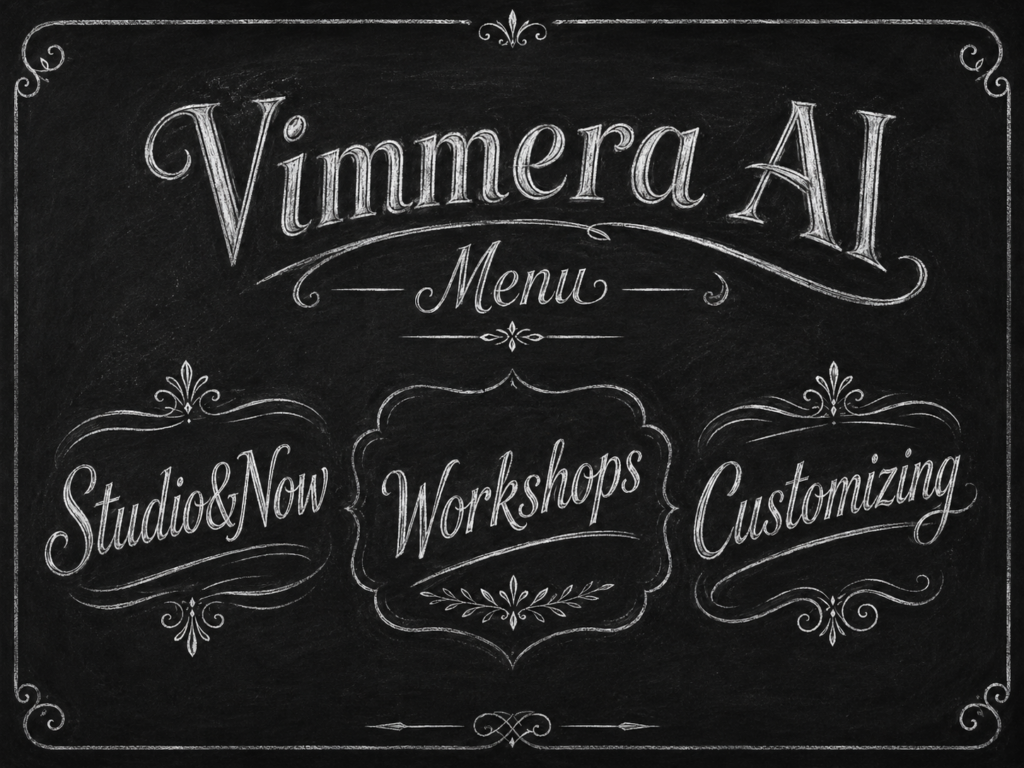
Prices & Costs
Transparent guidance for your AI project AI projects can rarely be priced as a flat rate, because scope, technical requirements, and data basis vary greatly from company to company. Our price overview therefore shows you which cost components you can generally expect and how a project is typically structured. The total costs are made up of the appropriate software license, possible services for setup, customization, or data preparation, as well as usage-based fees for AI models, storage, or data access. Which components are actually relevant depends on your specific use case. This gives you a clear overview in advance, without forcing your project into a rigid package. We will prepare a binding offer after an initial conversation, once requirements, data…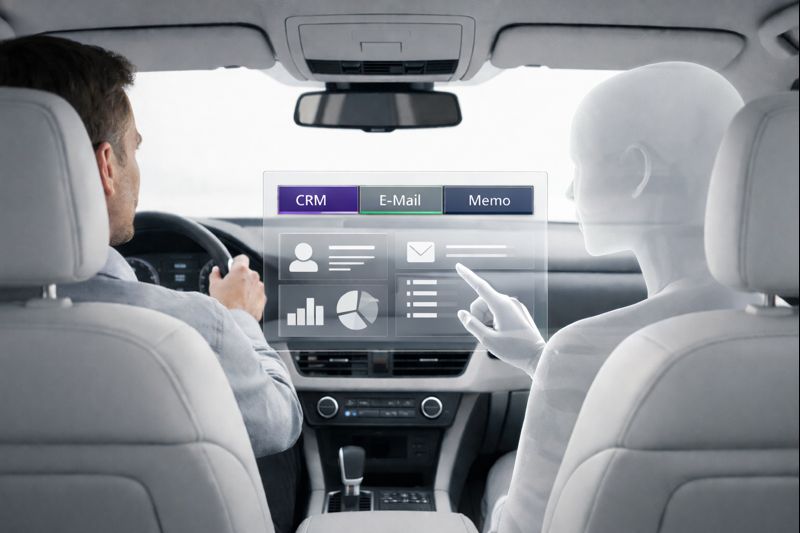
important principles
We ourselves come from hands-on practice, from industry, service, IT, and management, and bear responsibility for business processes, employees, and critical decisions. Against this background, we develop AI as a reliable tool for everyday work in companies, stable, comprehensible, secure, economically sound, and with clear benefits.
Implementing AI in Your Business the Right Way
Artificial intelligence opens up new opportunities for businesses while also raising key questions. How do I get started with AI in my business? What does using AI actually mean for my business? How can I expand my use of AI later on? What costs are involved, and how can investments be assessed realistically? Why are some people skeptical about AI? How can I bring my colleagues and employees along on this journey? And what factors determine whether AI will be successful in the long term? And that’s exactly where we come in! We make getting started with artificial intelligence as clear and simple as possible for your business. No endless workshops, unnecessary coordination, or theoretical concepts that add to your…