Concerns about AI in the company
Artificial intelligence opens up new possibilities for companies. At the same time, entirely legitimate questions arise.
What does all of this cost? How long does implementation take? Does AI really work reliably? What happens to my data? How do employees react? And is the effort ultimately even worth it?
These questions are not disruptive. They are important.
Because a good AI implementation does not begin with enthusiasm for technology, but with a clear view of opportunities, limitations, effort, and responsibility. That is exactly why, at Vimmera AI, we speak openly about typical concerns that we repeatedly encounter in conversations with customers, users, and prospects.
Our goal is not to talk concerns away. Our goal is to take them seriously, put them into context, and derive sound decisions from them.
Sometimes we cannot take away your concerns. But we can show you a path on which introducing AI in your company brings far more advantages than disadvantages. A path on which your company becomes more productive and your employees are relieved. A path on which AI does cost money, but generates significantly more money than is spent.
A few more examples:

From around the year 1900 onward, more and more horse-drawn carriages were replaced by cars. Coachmen, farriers, horse stable owners, saddlers, and entire industries became obsolete and were replaced. But entirely new industries emerged. Engine developers, engineers, designers, gas stations, … none of that would otherwise have existed. And today, far more people are employed in the new industries than ever were in their predecessors.
I myself completed training as a technical draftsman in the early 2000s. I still learned drafting on paper and on a drawing board. Quite quickly, 2D CAD systems were introduced and the drawing boards were dismantled. And even faster, 3D CAD systems were introduced and replaced the 2D systems. Out of an original 10 technical draftsmen, 2 engineers remained. Today, the training program for technical draftsmen no longer exists at all. Drawings in that sense are no longer needed either. -Everything happens directly in 3D CAD, and the processing machines create their necessary data from it.
What happened?
Times change. There are new tools and methods. Everything becomes faster.
And today, AI exists as a new tool.
Those who are a bit older still remember how PCs slowly began to emerge in the 1990s. Who didn’t hear somewhere back then: “Why should I use a PC? A typewriter can do all that too, and even better…”. That was also a huge innovation back then, one we can only smile about today.
Today, that innovation is AI. Not much more, but also not much less.
Still have concerns?
Feel free to keep reading. We hope this will help you a little.
What does all of this cost? Now and in the future?
One of the most common questions is: What does an AI solution really cost?
This question is justified, because AI is not just about a software license. Depending on the use case, costs may arise for analysis, data preparation, customization, operation, usage, training, and later expansions.
That is why we do not look at costs in isolation, but in relation to benefits, effort, and objectives.
At Vimmera AI, an AI implementation begins with the question of which specific process should be improved. Only then is it decided which solution makes sense, what scope is needed, and what costs are realistic. This helps us avoid oversized projects, unnecessary functions, and technical solutions that miss the actual need.
AI should not become a cost risk. AI should be used in a way that is understandable, controllable, and economically sensible.
Is AI a bottomless pit?
Many companies wonder whether an AI implementation will just keep going forever and constantly generate new costs.
The honest answer is: AI is not a one-time product that remains unchanged forever after installation. Companies change, knowledge changes, processes change, and the requirements for digital systems also evolve.
But that does not mean AI has to be a bottomless pit.
What matters is that the use of AI is planned in a structured way, clearly defined, and expanded step by step. Not every idea has to be implemented immediately. Not every process needs automation right away. And not every technical possibility is automatically economically sensible.
That is why we make sure to start with clear use cases, make benefits visible, and decide on expansions deliberately. This keeps AI manageable.
I automate one process and discover three new ones in the process. Does it never end?
In fact, that is often exactly what happens.
When a company begins to look more closely at its processes, additional weaknesses often become visible. You notice media discontinuities, duplicate work, unclear responsibilities, missing knowledge, or unnecessary manual steps.
That is not a flaw in the AI implementation. It is a sign that a company understands its workflows better.
What is important, however, is not to turn this into an endless project. Not every identified improvement has to be implemented immediately. We help prioritize topics: What brings quick relief? What is business-critical? What is technically easy to solve? What should be considered later?
This turns many possibilities into a clear roadmap.
How long does implementation really take?
The duration depends heavily on what is to be implemented.
A clearly defined AI assistant with existing documents can be implemented much faster than a comprehensive process automation with interfaces, role models, data validation, and multiple departments.
Important: A serious implementation is not just about technical deployment. It also includes analysis, goal definition, knowledge collection, data preparation, testing, feedback, training, and acceptance.
We try to keep the entry as lean as possible. At the same time, we do not skip any steps that are necessary for quality, security, and acceptance.
Our goal is not to put something live as quickly as possible. Our goal is to introduce a solution that can truly be used in everyday work.
Does AI really work the way I imagine it does?
Some expectations of AI are very high. Others are too cautious. Both are understandable.
AI can do a great deal: find information, structure texts, analyze documents, prepare answers, support processes, evaluate data, and make recurring tasks easier.
But AI is not a magical replacement for clean processes, clear rules, and good company knowledge.
For AI to work reliably, it must be used correctly. It needs suitable data, clear tasks, sensible boundaries, and professional review of the results. That is why we do not develop AI solutions in general terms, but tailored to your company, your workflows, and your requirements.
A good AI does not do everything. It does the right things better.
What if we spend a lot of money and it still doesn’t work in the end?
This risk exists especially when companies start without a clear objective.
If it is unclear which process should be improved, which data may be used, ով reviews the results, and how success is measured, even good technology can disappoint.
That is why we begin with analysis and realistic use cases. We check whether a project makes technical sense, is organizationally feasible, and is economically justifiable. If a use case is not suitable, we say so.
Not every topic is a good starting point for AI. That honesty is exactly what is important so that investments do not come to nothing.
What happens if the AI makes mistakes?
AI can make mistakes. It can misunderstand content, respond incompletely, or draw false conclusions.
That is why AI must not be used uncontrollably, especially not in sensitive or business-critical areas.
We develop systems so that they work with verified knowledge bases, receive clear tasks, and keep results traceable. Depending on the area of use, approval processes, role models, notices, source references, review mechanisms, and human oversight can be integrated.
AI is meant to support employees, not take on responsibility unnoticed.
What happens to our data?
Company data is often sensitive. It contains knowledge, processes, customer information, strategies, product details, or internal workflows.
That is why data security is part of AI implementation from the very beginning.
Together, we look at which data should be used, which data must not be used, where data is stored, who gets access, and which technical and organizational protective measures are required.
An AI solution may only be used if it matches the company’s security requirements. Data protection, access control, and controllable use are not add-on topics, but part of a professional AI architecture.
Are our data even good enough?
Many companies believe their data must be perfect before AI can be used.
That is not true.
In many cases, existing documents, manuals, process descriptions, emails, spreadsheets, logs, or experiential knowledge are already sufficient to implement initial meaningful use cases. However, this information must be reviewed, structured, and made usable for AI.
That is exactly where an important part of the work lies.
An AI does not automatically become good just because many documents are available. What matters is that relevant knowledge is found, cleaned up, categorized, and professionally confirmed.
How do we deal with employees who are afraid of AI?
Skepticism toward AI is normal.
Many employees wonder whether they will be replaced, whether their work will be monitored, or whether they will in future have to work with systems they do not understand.
These concerns should not be brushed aside.
A successful AI implementation requires transparency, explanation, and involvement. Employees need to understand what AI is being used for, which tasks it takes over, what limits it has, and what responsibility remains with humans.
At Vimmera AI, we therefore see implementation and acceptance as a fixed part of the project. AI only works when people understand it, trust it, and use it sensibly in everyday work.
Will AI make us all unemployed?
AI changes work. But it does not automatically replace people.
In many companies, the goal is not to replace employees, but to relieve them of repetitive, time-consuming, or error-prone tasks.
AI can help with searching, sorting, drafting, checking, summarizing, and preparing. This creates more time for customers, decisions, quality, consulting, creativity, and collaboration.
Our position is clear: AI should strengthen people, not displace them.
Will we lose control of our processes because of AI?
The opposite should be the case.
When implemented correctly, AI can make processes more transparent. It shows where knowledge is missing, where workflows are unclear, where decisions are not documented, and where manual work wastes unnecessary time.
Control is not lost because AI is used. Control is lost when AI is used without rules, without responsibilities, and without clear boundaries.
That is why we develop AI systems with traceable structures, defined roles, and clear areas of use.
Do we have to change everything at once now?
No.
Especially with AI, it is often sensible to start small and clearly.
A defined use case can show how AI affects the company, what data is needed, how employees react, and what benefits arise. On this basis, it can later be decided whether and how additional areas are included.
AI implementation does not have to be a major project that changes the entire company at the same time. It can grow step by step.
What if the AI is not used in everyday work?
That is one of the biggest risks in any digital implementation.
A solution can work technically and still fail if it does not fit everyday work. Reasons for this can include lack of training, overly complicated operation, lack of trust, unclear responsibilities, or poor integration into existing workflows.
That is why we look not only at the technology, but also at usage.
An AI solution must be accessible, understandable, and helpful. It must support people where they actually work. And it must be introduced in a way that makes the benefit tangible.
Will we become dependent on a provider?
Dependence arises especially when systems and data are structured unclearly.
We make sure to build solutions in a traceable way, document them properly, and design them so that companies understand how their AI systems work. This includes clear data structures, defined knowledge bases, documented settings, and transparent operating models.
Our goal is a long-term partnership, but not artificial dependence.
A good AI solution should remain controllable for the company.
Does AI even fit our industry?
AI does not fit every task. But almost every company has areas where knowledge must be searched, information processed, inquiries answered, documents checked, or recurring workflows supported.
That is exactly where AI can often help.
Whether AI makes sense for your company cannot be answered in general terms. It depends on your processes, data, requirements, and goals.
That is why we first examine where real value can be created. Not every industry needs the same solution. And not every company needs the same starting point.
How do we measure whether AI is worthwhile?
AI should not just be interesting. It should have an impact.
Possible metrics include, for example, less time spent searching, faster processing, fewer follow-up questions, fewer errors, better documentation, higher service quality, better availability of knowledge, or relief for certain teams.
Not every benefit is immediately visible in euros. But every sensible use of AI should be describable, observable, and, if possible, measurable.
That is why we work together to define how success should be recognized.
Who is responsible for AI results?
Responsibility remains with the human and with the company.
AI can support, prepare, check, structure, and make suggestions. But it does not automatically replace professional judgment, legal review, or business decisions.
That is why it is important to clearly define responsibilities. Who is allowed to use AI? Which results may be used directly? What needs to be checked? Where are approvals required?
A good AI introduction creates not only new possibilities, but also clear rules.
Do we have to completely rebuild our IT?
In many cases, no.
AI systems can often be introduced step by step and connected to existing structures. Depending on the need, a solution can initially work with existing documents, knowledge bases, or clearly defined data sources.
Interfaces to existing systems can be added later if they are useful and economically viable.
Together, we examine which technical integration is necessary and where a lean start is sufficient.
What if requirements change later?
Then the AI should be able to grow with them.
Companies do not stand still. Products change, processes are adapted, teams grow, new rules emerge, and knowledge continues to develop.
That is why we do not view AI as a rigid one-time project. Good systems must be maintainable, reviewable, and further developable.
What matters is that this further development happens in a controlled way: with clear priorities, traceable adjustments, and an eye on the actual benefit.
What if we do not yet know exactly where to start?
That is normal.
Many companies know that AI will become important, but cannot yet say exactly which area should be examined first.
That is what a structured analysis is for. Together, we look at processes, knowledge, bottlenecks, recurring tasks, cost drivers, and possible risks. From this, concrete use cases emerge that can be evaluated and prioritized.
You do not have to come to us with a finished solution.
It is enough if you know that something should be improved.
Concerns are not an obstacle
Concerns about AI are not a sign of rejection. They are a sign of responsibility.
Anyone who asks about costs, benefits, security, acceptance, effort, and limitations creates the foundation for a successful introduction.
At Vimmera AI, we take these questions seriously. We speak openly about possibilities and limitations, assess use cases realistically, and develop solutions that fit the company.
Not AI at any price.
But AI where it makes sense, is understood, and creates real value.
Would you like to find out whether AI makes sense for your company?
Then please get in touch with us.
Together, we will look at which questions are most important for you, which processes are suitable, and what a realistic starting point is.

Concerns about AI in the company
Artificial intelligence opens up new possibilities for companies. At the same time, entirely legitimate questions arise. What does all of this cost? How long does implementation take? Does AI really work reliably? What happens to my data? How do employees react? And is the effort ultimately even worth it? These questions are not disruptive. They are important. Because a good AI implementation does not begin with enthusiasm for technology, but with a clear view of opportunities, limitations, effort, and responsibility. That is exactly why, at Vimmera AI, we speak openly about typical concerns that we repeatedly encounter in conversations with customers, users, and prospects. Our goal is not to talk concerns away. Our goal is to take them seriously, put…
How do I get started?
Getting started with artificial intelligence does not have to be complicated or time-consuming. Many companies know that AI will play an important role in the future, but at the outset they face very concrete questions: Where is the best place to start? Which processes are suitable? Which data may be used? Do I even have all the data an AI needs? And how can it be ensured that an AI solution not only works technically, but also really supports day-to-day work? Vimmera AI supports companies exactly at this point. Getting started does not begin with finished software or an abstract technology decision, but with understanding your company, your tasks, and your existing knowledge base. We work with you to develop…
How much do Vimmera solutions cost?
One of the questions we’re asked most often is: How much does an AI solution from Vimmera AI cost? Our honest answer is: We can only give you a reliable answer once we know your company and your requirements. That’s because Vimmera AI doesn’t offer off-the-shelf solutions. We develop and operate AI systems tailored to your processes, goals, and quality requirements. We’re not talking about just any standard chatbot or generic applications, but solutions that work reliably in your company and deliver tangible benefits. While we do have proven approaches and existing building blocks, these too are generally adapted to the specific requirements. Every company has its own structures, processes, and domain-specific requirements and constraints. That’s exactly why purely standard…
Training, briefings and support
The use of artificial intelligence is fundamentally changing the world of work. New tools are emerging, new opportunities are opening up, and at the same time questions, uncertainties and new requirements are arising. For AI to be introduced in a company not only on a technical level, but also used effectively and responsibly in day-to-day work, knowledge, understanding and guidance are needed. For this reason, Vimmera AI offers comprehensive training, instruction, workshops, presentations and ongoing support. These are tailored to the needs of each organization, designed with practical application in mind, and delivered in a way that enables employees, managers and partners to use AI safely and confidently. Vimmera AI sees training not as a standalone information session, but as…
Introducing AI in Your Business
Introducing artificial intelligence often begins with a simple thought in many companies:We should use AI. Shortly afterward, the first very concrete questions arise: What does the legal framework look like? What role do the GDPR and the EU AI Act play? What is allowed and what is not? What requires particular attention within the company? What requirements must be met for AI to be used effectively? And what costs, risks, and timelines are realistic? Each of these questions makes it clear that artificial intelligence is not about a single tool, but about a complex interplay of technology, law, organization, and people. The topics quickly multiply and become more difficult to navigate. This is exactly where Vimmera can help. We help…
Why many people are skeptical about AI
Artificial intelligence is everywhere. In the news, on social media, in new tools. And it often sounds as though AI is suddenly going to change everything. No wonder many people react skeptically at first or even become afraid. Typical thoughts and concerns include: Will AI take my job away? Will I eventually no longer be needed? Does my employer even understand what they are introducing? Who checks the results, and who is liable if something goes wrong? What happens to my data and our internal information? Do I suddenly have to learn everything all over again, and will I even be able to keep up? Will all this just be surveillance under a new name? These questions are not exaggerated.…
Successfully Implementing Artificial Intelligence in Your Company
The secret to successfully introducing artificial intelligence in companies Many companies embark on AI implementation with high expectations. They take the first steps and implement systems, yet still see no tangible success. Productivity does not increase as planned, employees are slow to accept the new solutions and barely use them in the end. Time, budget and commitment go into a project that fails to deliver its value. Such experiences are becoming more common. Unfortunately. But it doesn’t have to be this way. The success of AI implementation depends on more than technology alone. Companies need clear goals, robust processes and the active involvement of the people who work with AI every day. By taking these factors into account early on,…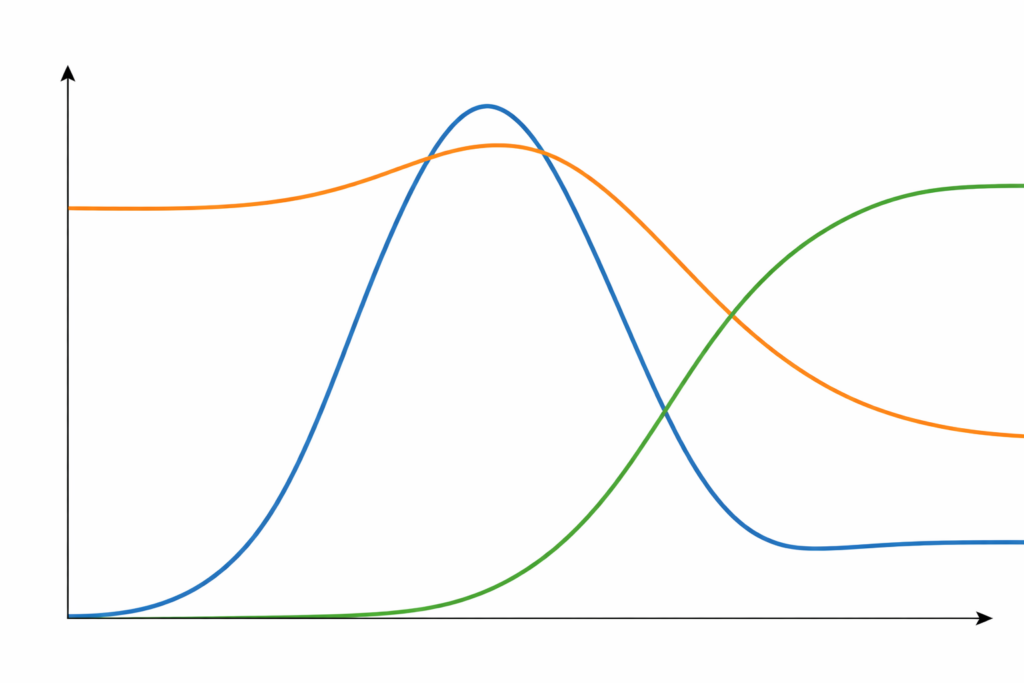
Time to AI success
Many companies associate AI with the expectation that after implementation, relief will be immediate and productivity will noticeably increase. In reality, however, this effect usually does not become apparent right after the start. AI is rarely a "switch" that is flipped and reliably saves time from day one. Rather, the benefit emerges gradually, because a successful AI implementation always also means change. For AI to become truly effective in a company, preparation is needed first. Processes must be understood and clearly defined, knowledge must be collected and made available in a structured way, and employees must learn how to work with the system effectively. At the same time, day-to-day business continues. This combination often initially leads to a higher workload…
This is how our AI works for you
Artificial intelligence should serve as a reliable work tool: understandable in its use, easy to operate in everyday work, and built on the knowledge of the company itself. Vimmera AI develops systems for this purpose that work with verified, company-specific information and give employees easy access to relevant knowledge. This creates better conditions for well-founded decisions, reduces the time spent searching, and makes information available where it is needed in day-to-day work. At the same time, the results remain traceable, controllable, and technically sound. AI that understands people A particular advantage of Vimmera AI's solutions is their user-friendliness. The systems are designed so that they do not require precise inputs or special prompt knowledge. Even imprecisely worded questions are understood,…
Our approach
What makes us and our services special? Vimmera AI deliberately does not follow the approach of merely providing software that enables companies to quickly “build something” themselves. Our goal is to develop sustainable AI systems together with our customers that are reliable, secure, high-quality, and usable in the long term. For us, AI is not created overnight and not by simply uploading documents, but through a structured, collaborative, and practice-oriented approach. A central principle here is: a quick solution is rarely a good solution, especially when it comes to AI. In this field in particular, “quick offers” seem especially tempting. A chatbot can be set up in just a few days, documents are uploaded, and initial answers appear. What is…
Introduction and Change Management
AI only works if people use it: introduction and change ensure acceptance, clear rules, and real adoption in everyday work. The use of AI is not just a technical issue; it always also affects people, their work, their responsibility, and often their feelings. That is why change management is a central component of every collaboration with Vimmera AI. We know that many employees are initially skeptical about AI. Quite a few wonder whether they could be replaced, whether their expertise will lose importance, or whether they will in future be merely “operators of a machine.” In addition, the media often report on “AI as a job killer,” which creates uncertainty and reservations. Vimmera AI takes these concerns seriously and addresses…
Support and further development
After the start comes the benefit: support ensures that quality, acceptance, and impact continue to increase permanently instead of stagnating. With the introduction of an AI system, the work is not finished; it really begins there. Vimmera AI does not leave companies alone after go-live, but sees the collaboration as a long-term partnership. Our solutions are designed so that they can evolve, grow with you, and continuously improve – professionally, organizationally, and technically. After implementation, we actively support our customers in stabilizing systems in day-to-day use, evaluating experiences, optimizing results, and keeping knowledge up to date. Corporate knowledge changes, products are further developed, processes adapt, legal frameworks change – and AI systems must be able to respond to exactly that.…