Customer Service & Support
In customer service, for example, an intelligent assistant supports employees in appearing more confident, responding faster, and providing well-founded and consistent advice—regardless of experience, location, or time zone. At the same time, central inputs such as emails and inquiries are automatically analysed, prioritised, summarised, and forwarded to the appropriate departments.
Corporate communications also benefit: style, tone, and corporate wording remain consistent, content is checked, errors are caught early, and texts are improved directly. This creates a professional flow of information that saves time, reduces risks, and sustainably strengthens trust.
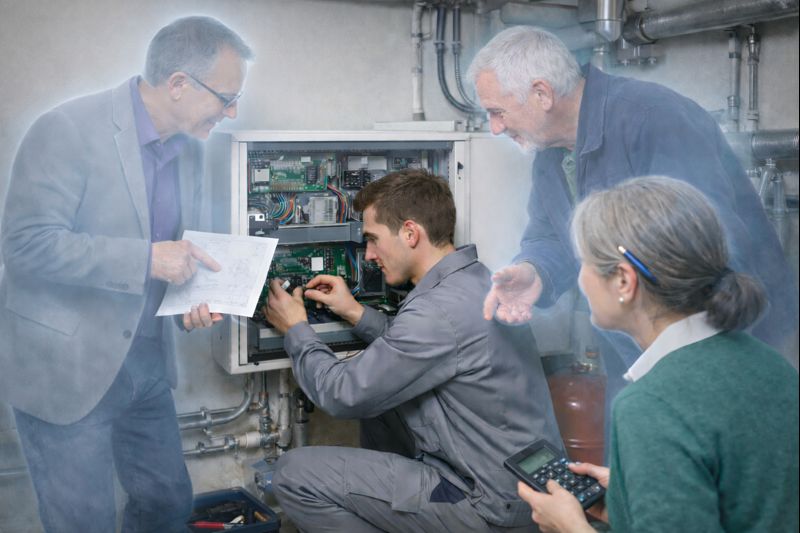
In the past, service staff often had to consult, research extensively, or improvise when faced with more complex questions or special situations. This cost time, created uncertainty, and often led to varying answer quality.
Today, they have an intelligent assistant at their side that bundles relevant company knowledge, product information, process descriptions, and case studies, and makes them available in an understandable form. This way, customers receive well-founded, consistent, and high-quality answers more quickly—around the clock, regardless of location, time zone, or the individual experience of each employee.
Even less experienced service staff can suddenly provide advice at a very high level because the system actively supports them, provides additional hints, points out risks, suggests alternatives, and avoids mistakes. As a result, customer service becomes not only faster, but also more reliable, professional, and sustainably relieved—and creates experiences that strengthen trust and foster long-term loyalty.
In many companies, central information converges at a single point—often at reception or in a central mail or service unit. Numerous emails, letters, faxes, online inquiries, customer feedback, or internal communications arrive there daily. These must be reviewed, understood, assigned, prioritised, and then forwarded to the appropriate departments or employees. Frequently, an initial “quick” response is even sent directly from reception—often under time pressure and without a complete overview. This ties up resources, is prone to errors, and costs valuable time.
With Vimmera AI solutions, this process can be intelligently supported and largely automated. Incoming messages are automatically analyzed, understood in terms of content, thematically categorised, prioritised, and assigned to the appropriate departments or individuals. Not only senders or keywords are considered, but also the actual content, context, and relevance of the message.
Additionally, automatically structured summaries can be created and attached to the forwarded messages. This way, employees do not have to read every email or document in full to understand what it is about—they receive the most important points, background information, and possible courses of action at a glance. This creates clarity, speeds up decisions, and significantly reduces follow-up questions and processing times.
The reception benefits twice over: recurring routine tasks are reduced and, at the same time, the quality of forwarding increases. Central units can once again focus more on their actual core tasks—on people, on customer contact, on communication, and on the company’s business.
The result: more speed, higher precision, less strain—and a professionally organised flow of information that noticeably relieves companies and at the same time improves service quality.
Communication shapes the image of a company—whether in sales, customer service, technical support, or general customer and business communication. In reality, however, many different employees write to customers, partners, or internal recipients—with different styles, different word choices, different confidence, and sometimes with varying content quality. This leads to inconsistencies, misunderstandings, unclear statements, or in the worst case, factually incorrect or legally problematic content.
Vimmera AI solutions help companies to standardise, secure, and raise the quality of communication to a new level—without making it impersonal or “machine-like.” Company language, tone, technical language, corporate wording, and desired style guidelines are taken into account and intelligently adopted. Grammar, expression, and language quality are automatically adjusted—precisely, to a high standard, and at the same time sounding natural.
It’s not just about language, but above all about content. By directly connecting to the company’s knowledge base, statements can also be checked for content. The system analyzes the entire communication history: • Is the statement made correct? • Is this information even allowed to be communicated in this way? • Are article numbers, prices, technical descriptions, or areas of application correct? • Does the statement contradict company policies, product reality, or legal requirements?
Employees receive automatic feedback, are alerted to errors, receive suggestions for improvement, and—if desired—directly corrected text versions. Errors are intercepted before they reach customers. This way, employees learn with every communication without being exposed—completely confidentially and securely. If desired, this process can be designed so that only the author receives the support and no one else.
Another advantage: this quality and style assurance works in all languages of the world. Communication can be formulated in any language and transferred into any other language correctly, in the appropriate style, and with the right tone. This allows service and sales teams worldwide to present themselves consistently, appear professional, and still respond individually to customers.
The result:
Communication becomes more reliable, consistent, factually correct, and stylistically convincing—and represents the company at the highest level at all times. It’s as if an experienced colleague reviews every important message—only faster, completely confidential, more secure, and fully integrated into everyday work.
Technology and Service
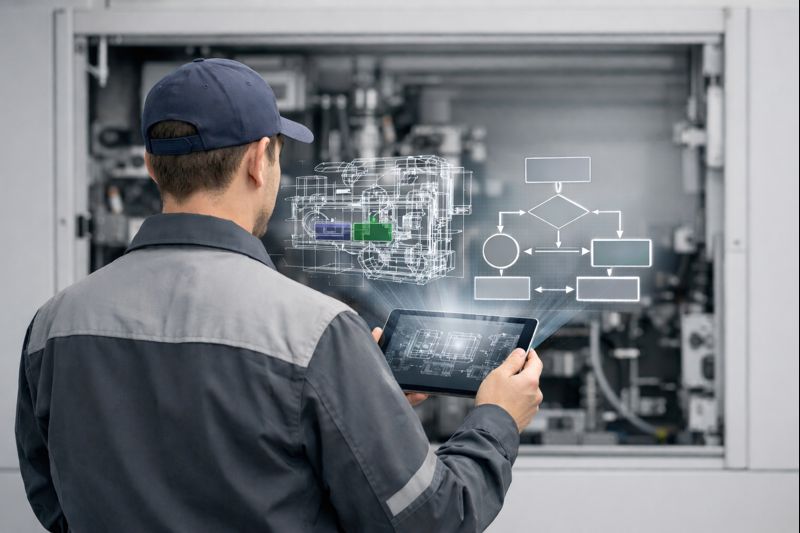
Technical and service organisations benefit especially when relevant knowledge is available directly at the point of deployment. Vimmera AI provides technical information, setting values, warnings, best practices, and experiential knowledge in context, so that employees can work safely and efficiently even in complex situations. Typical tasks can thus be supported much better. Setting values and […]

Expert opinions and complex documents
For expert opinions and extensive, complex document collections, a clear structure determines whether content actually becomes usable. Vimmera AI helps to unlock, compare, and selectively evaluate large amounts of text without having to manually read hundreds of pages. Content is not only found, but also understood in its context and made usable for decision-making. Typical […]

Complex calculations
In complex calculations and analyses, particular added value arises when questions can be described in natural language and the results remain comprehensible, verifiable, and reproducible at the same time. Another area in which Vimmera AI’s AI systems create significant added value is demanding calculations, analyses, and numerical evaluations. While traditional tools such as spreadsheets or […]
Customer Service & Support
In customer service, Vimmera AI supports employees in appearing more confident, providing more informed advice, and at the same time being noticeably relieved. In customer service, Vimmera AI supports employees in appearing more confident, providing more informed advice, and at the same time being noticeably relieved. In the past, they often had to consult with others, conduct lengthy research, or improvise when faced with more complex questions or special situations. This cost time, created uncertainty, and often led to varying answer quality.
Today, they have an intelligent assistant at their side that bundles relevant company knowledge, product information, process descriptions, and case studies, and makes them available in an understandable form. This way, customers receive faster, well-founded, consistent, and high-quality answers — around the clock, regardless of location, time zone, or the individual experience of each employee.

Sales & Quotation Preparation
Sales clearly benefits when proposal and tender work becomes faster, more consistent, and less dependent on the individual knowledge of specific employees. Vimmera AI helps to structure complex requirements, bring together relevant information, and systematically prepare proposals. Tenders and inquiries can be automatically analysed and converted into clear requirements, criteria, and service modules. Suitable references, […]

Marketing & Communication
Marketing and corporate communications particularly benefit when content is not based on fragmented knowledge or individual wording, but on a secure and consistent information base. When texts, statements, and messages are derived from verified company information, a significantly higher content quality, professional accuracy, and consistency across all channels is achieved. The solutions from Vimmera AI […]
Personnel (HR) & Organization
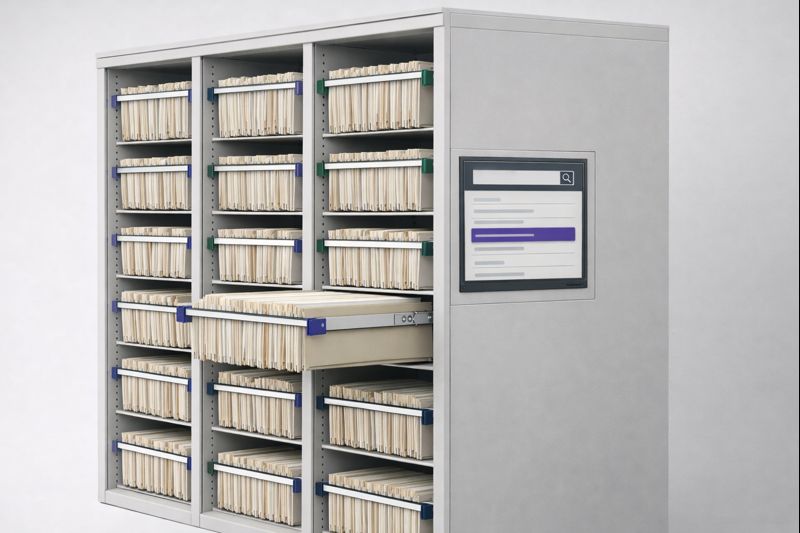
HR (including personnel) and organizational processes particularly benefit when policies, role descriptions (e.g., job descriptions or areas of responsibility), procedures, and organizational knowledge are centrally available, up-to-date, and at the same time securely protected. Employees and managers thus receive reliable guidance, while sensitive personnel and company data are processed in a controlled manner. Especially in […]

Leadership & key personnel
AI reduces key person risks by making knowledge structured and readily available and decisions traceable, thereby relieving managers and subject matter experts in their daily operations. Examples of typical tasks: preparing decisions and structuring options. Securing and making experiential knowledge accessible, documenting standards/guidelines, answering recurring questions, supporting prioritization and communication. Another significant effect concerns the […]