Leadership & key personnel
AI reduces key person risks by making knowledge structured and readily available and decisions traceable, thereby relieving managers and subject matter experts in their daily operations.
Examples of typical tasks: preparing decisions and structuring options. Securing and making experiential knowledge accessible, documenting standards/guidelines, answering recurring questions, supporting prioritization and communication.

Another significant effect concerns the so-called key persons in companies, i.e., experienced specialists, managers, and top performers who have often served as central sources of knowledge. They are regularly involved in technical questions, special cases, and decision-making processes, which ties up time and limits their availability for their actual core tasks.
The use of Vimmera AI fundamentally changes this situation. Knowledge is no longer primarily tied to individuals, but is provided in a structured, centrally available, and reliable manner within the company. Employees can access this knowledge base, receive well-founded answers, and make decisions more confidently without being permanently dependent on individual experts.
This noticeably relieves key persons. They gain freedom to focus on strategic tasks, further development, leadership, and value-adding activities, while their knowledge remains available to the company.
In many organizations, a significant portion of crucial know-how is tied up in the minds of individual employees. If one of these people leaves the company or changes roles internally, there is a risk that knowledge built up over years will be lost.
The solutions from Vimmera AI help to systematically secure this knowledge and make it usable company-wide. Experiential knowledge, proven procedures, decision-making bases, and technical contexts are systematically recorded and stored in a central knowledge base. This knowledge is thus permanently, contextually, and practically available.
In this way, know-how is not only preserved but actively used. New employees can be onboarded more quickly, teams work more independently, decision quality remains stable, and the organization as a whole becomes more robust to personnel changes. Knowledge retention thus becomes a strategic component of a sustainable and high-performing organization.
Technology and Service
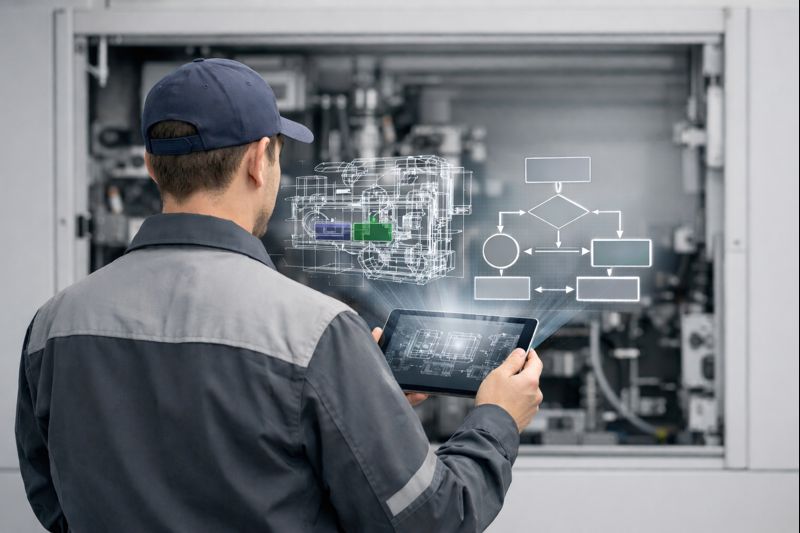
Technical and service organisations benefit especially when relevant knowledge is available directly at the point of deployment. Vimmera AI provides technical information, setting values, warnings, best practices, and experiential knowledge in context, so that employees can work safely and efficiently even in complex situations. Typical tasks can thus be supported much better. Setting values and […]

Expert opinions and complex documents
For expert opinions and extensive, complex document collections, a clear structure determines whether content actually becomes usable. Vimmera AI helps to unlock, compare, and selectively evaluate large amounts of text without having to manually read hundreds of pages. Content is not only found, but also understood in its context and made usable for decision-making. Typical […]

Complex calculations
In complex calculations and analyses, particular added value arises when questions can be described in natural language and the results remain comprehensible, verifiable, and reproducible at the same time. Another area in which Vimmera AI’s AI systems create significant added value is demanding calculations, analyses, and numerical evaluations. While traditional tools such as spreadsheets or […]

Customer Service & Support
In customer service, Vimmera AI supports employees in appearing more confident, providing more informed advice, and at the same time being noticeably relieved. In customer service, Vimmera AI supports employees in appearing more confident, providing more informed advice, and at the same time being noticeably relieved. In the past, they often had to consult with others, conduct lengthy research, or improvise when faced with more complex questions or special situations. This cost time, created uncertainty, and often led to varying answer quality.
Today, they have an intelligent assistant at their side that bundles relevant company knowledge, product information, process descriptions, and case studies, and makes them available in an understandable form. This way, customers receive faster, well-founded, consistent, and high-quality answers — around the clock, regardless of location, time zone, or the individual experience of each employee.

Sales & Quotation Preparation
Sales clearly benefits when proposal and tender work becomes faster, more consistent, and less dependent on the individual knowledge of specific employees. Vimmera AI helps to structure complex requirements, bring together relevant information, and systematically prepare proposals. Tenders and inquiries can be automatically analysed and converted into clear requirements, criteria, and service modules. Suitable references, […]

Marketing & Communication
Marketing and corporate communications particularly benefit when content is not based on fragmented knowledge or individual wording, but on a secure and consistent information base. When texts, statements, and messages are derived from verified company information, a significantly higher content quality, professional accuracy, and consistency across all channels is achieved. The solutions from Vimmera AI […]
Personnel (HR) & Organization
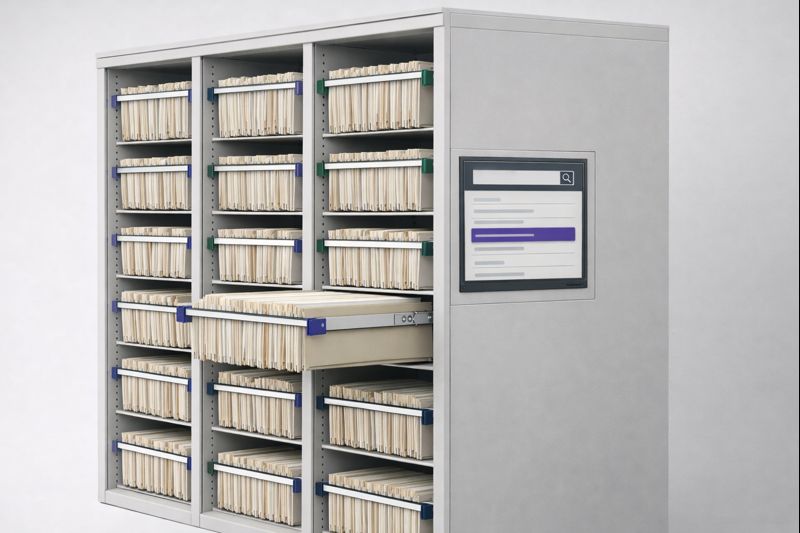
HR (including personnel) and organizational processes particularly benefit when policies, role descriptions (e.g., job descriptions or areas of responsibility), procedures, and organizational knowledge are centrally available, up-to-date, and at the same time securely protected. Employees and managers thus receive reliable guidance, while sensitive personnel and company data are processed in a controlled manner. Especially in […]
Leadership & key personnel
AI reduces key person risks by making knowledge structured and readily available and decisions traceable, thereby relieving managers and subject matter experts in their daily operations. Examples of typical tasks: preparing decisions and structuring options. Securing and making experiential knowledge accessible, documenting standards/guidelines, answering recurring questions, supporting prioritization and communication. Another significant effect concerns the […]