Compliance
Compliance and AI – Security, Responsibility and Regulatory Compliance
The use of artificial intelligence in companies requires not only technological competence, but also clear rules, reliable structures, and a high degree of responsibility. Compliance is not an optional add-on, but forms an essential foundation for the sustainable, secure, and legally compliant operation of AI systems.
Vimmera AI specifically supports companies in developing, implementing, and operating AI solutions in such a way that both regulatory requirements and internal guidelines and company-specific specifications are consistently taken into account.
Data Protection, GDPR and EU AI Act
Especially when handling sensitive and personal data, data protection has the highest priority. For this reason, Vimmera AI designs and implements all AI systems with consistent consideration of the General Data Protection Regulation, the EU AI Act, and relevant legal and industry-specific regulations.
Transparent data processing, clearly defined purposes of use, controlled access mechanisms, and traceable processes for storing and using information ensure a high level of security, reliability, and regulatory compliance.
At the same time, the requirements of the EU AI Act are integrated early into the system architecture and governance structures. This particularly concerns aspects such as risk assessment, transparency, traceability, documentation, and responsible AI use.
This way, companies always retain full control over their data and benefit from an AI solution that is both data protection compliant and future-proof.
Governance, Control and Transparency
In addition, responsible and compliant use of AI requires clear responsibilities as well as structured control mechanisms. Vimmera AI supports companies in building suitable governance structures that enable secure, traceable, and controlled operation.
This includes, among other things, role and authorization concepts, defined approval processes, comprehensive documentation, auditability, and transparent decision-making bases. This ensures that AI systems remain permanently controllable, verifiable, and are cleanly embedded organizationally.
Risk Minimization and Quality Assurance
At the same time, compliance also includes the early identification and systematic minimization of potential risks. Against this background, Vimmera AI places particular emphasis on stable system architectures, verified data sources, and controlled learning processes.
Additionally, validations, continuous quality assurance measures, and ongoing monitoring help to detect, assess, and specifically avoid undesirable system behaviors, biases, or incorrect decisions at an early stage.

NDAs at Vimmera AI
Confidentiality Agreements (NDAs) Confidentiality is just as natural for Vimmera AI as data protection and data security. Whenever sensitive, business-critical, or personal information is exchanged, it must be clearly regulated how this data is handled. That is why we always work on the basis of binding confidentiality agreements, so-called NDAs (Non-Disclosure Agreements). As soon as … Weiterlesen

The GDPR General Data Protection Regulation
Data protection as a basic prerequisite for the use of AI The General Data Protection Regulation (GDPR) is the central data protection law of the European Union. It regulates how personal data may be collected, processed, stored, and used. For companies that use AI, the GDPR is particularly relevant, because AI systems often work with … Weiterlesen
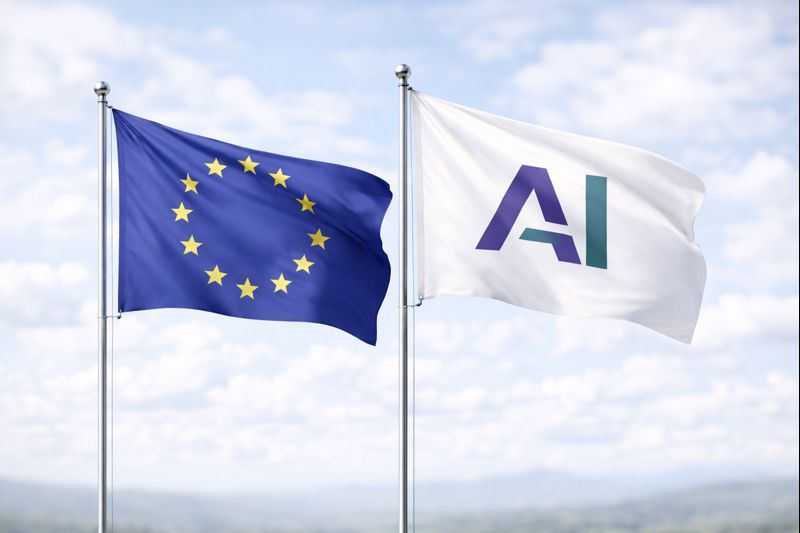
The EU AI Act
The new legal framework for the use of AI in Europe The EU AI Act is the world’s first comprehensive legal regulation for artificial intelligence. With it, the European Union creates a binding legal framework for how AI systems may be developed, provided, and used. The goal is to enable innovation – but at the … Weiterlesen