14. Change Management
Change Management – Safely Guiding People Through Change
The introduction of AI is not just a technical project, but a profound organizational and cultural change. New systems, new ways of working, and new possibilities trigger uncertainty, questions, or even fears in many people. Vimmera AI knows this – and that is precisely why change management is an integral part of every AI implementation.
Our goal is not just to provide AI, but to build trust, create understanding, and promote acceptance. Employees should not feel replaced or controlled, but supported, relieved, and empowered.

What Happens in Change Management?
In change management, we create space for questions, concerns, and open conversations. Employees can express their worries, give feedback, and learn to understand what the AI does – and what it does not do. Vimmera AI actively supports this process through information formats, discussions, training, and continuous communication.
It is clearly communicated which tasks the AI takes over, where it provides support, and where human competence, experience, and responsibility remain crucial. This way, AI is understood as a tool – not as a threat.
At the same time, managers and teams are supported in actively shaping the change. We help define new roles, clarify expectations, and meaningfully organize collaboration between humans and AI.
Why This Step Is So Important
Without change management, many AI projects fail not because of the technology, but due to a lack of acceptance. Fears, uncertainties, or resistance can lead to systems not being used or even deliberately bypassed.
Through targeted support, uncertainty turns into trust. Employees experience that their perspectives matter and that AI helps them instead of harming them. This creates the foundation for sustainable use and real productivity gains.
What You Get Out of It
With professional change management, you ensure that your AI is not only implemented but also accepted. Your employees feel taken seriously, informed, and involved. The willingness to use new tools increases significantly.
You gain a company that actively supports the change – instead of blocking it. And you create a culture in which AI is seen as an opportunity, not a risk.
In Short:
Change management turns an AI implementation into a shared step forward – instead of a disruption to everyday work.

1. The introductory meeting
The introductory meeting – the first step towards effective AI The use of artificial intelligence in companies does not begin with technology, but with understanding.That’s why every collaboration with Vimmera AI starts with a structured introductory meeting. This meeting serves to truly understand your organization, your challenges, and your goals. It is not a sales […]

2. The analysis discussion
The analysis meeting – from understanding to structure After the introductory meeting, the next decisive step follows: the analysis meeting.This is no longer about a first mutual introduction, but about a systematic, joint understanding of your organization. In this meeting, we begin the structured company analysis based on DEX (Digital Experience & Execution) – the […]

3. The DEX analysis
The DEX Analysis – Clarity About Your Organization The DEX Analysis (Digital Experience & Execution) is the foundation of every successful AI implementation with Vimmera AI. It creates an objective, reliable picture of how your organization actually works – not just on paper, but in real everyday life. After the analysis meeting, we can, if […]
4. The knowledge collection
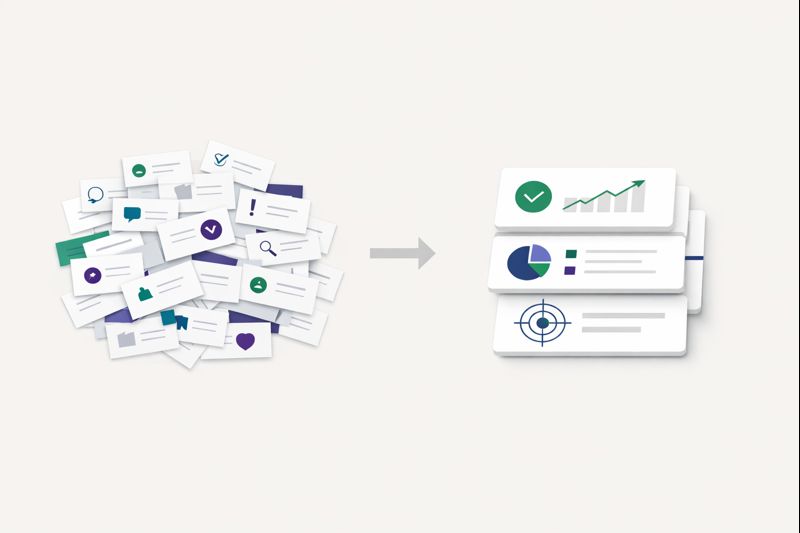
The collection of company knowledge – making everything visible Before AI can use, understand, and reliably provide knowledge, this knowledge must first be fully and correctly captured. That is precisely why the systematic collection of company knowledge is one of the most important steps on the way to an effective AI solution. This is expressly […]
5. Data preparation
Data preparation – from raw material to networked corporate knowledge Once the corporate knowledge has been fully collected, the step begins that decisively determines how powerful, reliable, and useful the later AI will actually be: data preparation. In this phase, a large number of individual files, texts, media, system extracts, and experience reports are, for […]

6. The data verification
Data Verification – Creating Trust in Knowledge and AI After company knowledge has been collected and structured, cleaned, and linked together during data preparation, the step follows that turns information into truly reliable knowledge: data verification. In this phase, it is decided which content may actually be considered valid, binding, and actively usable. Because even […]

7. Data embedding and data vectorization
Embeddings & vector search – enabling AI to find and use knowledge precisely After knowledge has been collected, processed, and verified, the next step ensures that the AI can later access this knowledge quickly, precisely, and in the right context: chunking, embedding, semantic processing, and the creation of vector databases (vector stores). This step is […]
8. The selection of the LLM or LLMs
The selection of LLMs – the right AI brain for your tasks After knowledge has been structured, verified, and technically prepared so that it can be found and used precisely, the next central step follows: the selection of Large Language Models (LLMs). LLMs are the “thinking machines” behind AI – they determine how language is […]

10. Implementation of security mechanisms
Additional security mechanisms – protection for knowledge, systems, and results In addition to selecting and combining the appropriate LLMs, another important step is implemented depending on the requirements and area of application: the implementation of additional security mechanisms. Because your knowledge is valuable, and it deserves the same protection as any other business-critical system. Vimmera […]

9. Prompt Engineering
Prompt Engineering – Giving AI a Clear Identity After the company knowledge has been collected, processed, and verified, another central step follows: prompt engineering. In this phase, it is determined how the AI thinks, responds, and acts. Vimmera AI takes this step in close coordination with you, because this is not about technology, but about […]
11. Additional data sources and interfaces
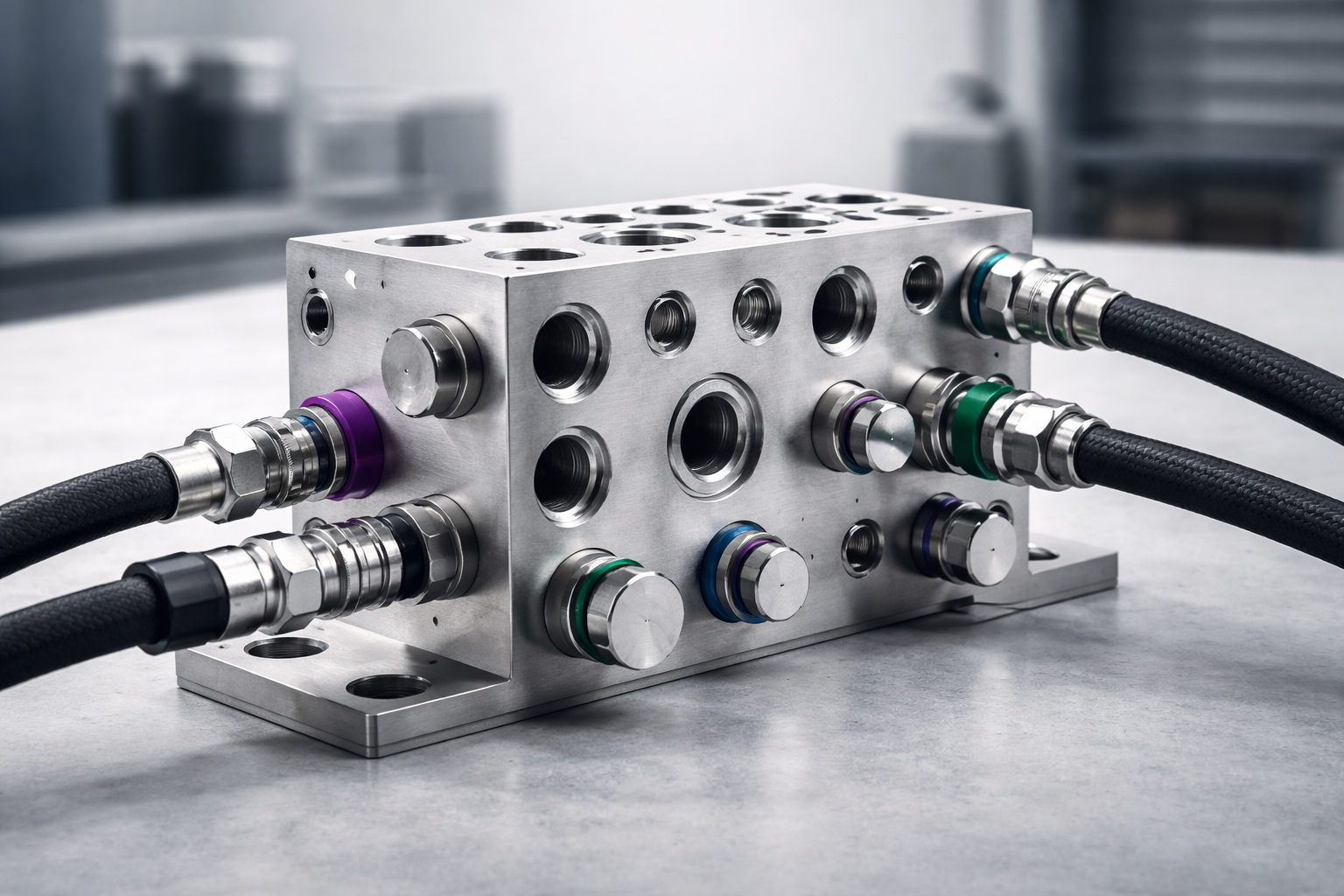
In addition to the knowledge base from documents and verified company knowledge, it may be useful or necessary—depending on the application—to connect additional data sources. This includes the additional implementation of databases, business systems, and other data interfaces, for example via modern integration standards such as MCP. The background is simple: Not everything an AI […]

12. Customization of the user interface
Frontend & User Interface – AI where people really work For AI to be effective in a company, it is not enough for it to work technically. It must be available where employees actually work – simply, reliably, and without additional hurdles. That is why Vimmera AI generally relies on browser-based frontends. Browser-based solutions offer […]
13. Rollout of the AI systems
Rollout & Introduction – Bringing AI into Everyday Work Step by Step After all technical, content-related, and organizational foundations have been established, the rollout phase begins. In this step, the AI is not simply “activated,” but is introduced into real everyday work in a controlled, guided, and coordinated manner. The goal is for the AI […]
14. Change Management
Change Management – Safely Guiding People Through Change The introduction of AI is not just a technical project, but a profound organizational and cultural change. New systems, new ways of working, and new possibilities trigger uncertainty, questions, or even fears in many people. Vimmera AI knows this – and that is precisely why change management […]

15. Fine-tuning before the actual launch
Joint fine-tuning before go-live – ensuring quality before it counts After AI has been introduced in initial teams or departments, a targeted phase of joint optimization, adjustment, and error correction follows – even before the system goes live company-wide. This phase is crucial to turn a functioning solution into a truly robust, practical AI. Pilot […]

16. Go-live
the productive start of your AI After the successful pilot phase and joint fine-tuning comes the decisive moment: the go-live. In this step, the AI is officially activated for productive use within the entire defined scope. From now on, it is no longer just a pilot project, but a permanent part of your working environment. […]
17. The second DEX analysis
Measure impact, identify potential, develop in a targeted way After the go-live, the phase begins in which it is decided whether AI has not only been “introduced” but has actually become effective. This is exactly why the DEX analysis is carried out a second time. It is not a formal conclusion, but a deliberately set […]

18. Care, support & further development
so that your AI remains valuable in the long term With the go-live and the second DEX analysis, the AI has successfully arrived in your company. But just like your company itself, your AI does not stand still. Products change, processes are adjusted, new insights emerge, markets and requirements continue to develop. At the same […]

19. Documentation
Transparency, Security and Long-Term Usability A professional AI system is only as good as its traceability. That is why documentation at Vimmera AI is not a by-product, but a central component of every solution. It ensures that your AI system not only works today, but also tomorrow, in a year, and in a changed organizational […]