Use automation sensibly
Vimmera AI enables companies to automate business processes in a targeted and controlled manner with the help of AI. The focus is not on isolated tools, but on clearly structured subprocesses that are integrated into existing systems and workflows. This reduces manual routine tasks, shortens throughput times, and increases the quality of results. Through intelligent analysis, document processing, and decision support, stable, scalable workflows are created. Companies always retain control over approvals, responsibilities, and quality assurance. At the same time, new automation potentials can be continuously identified and gradually unlocked.
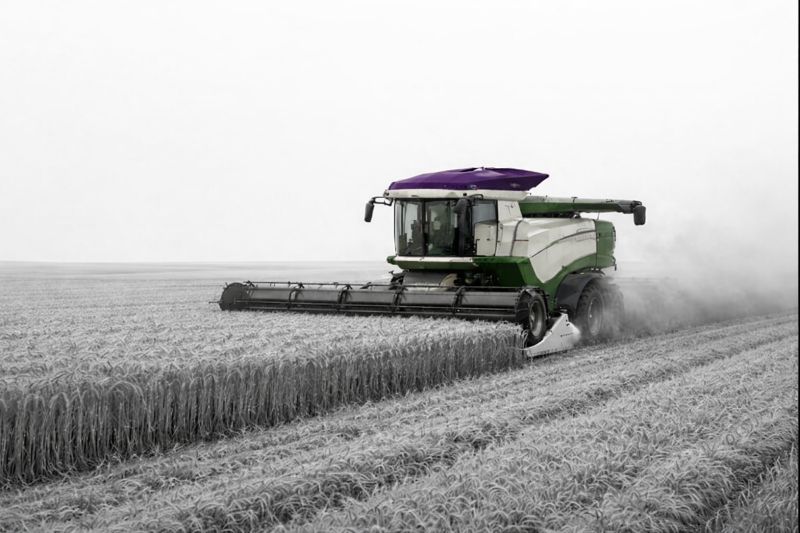
The automation of processes with the help of AI is, for us, an instrument for sustainable performance improvement. In this context, it means the targeted takeover of clearly defined, recurring, and rule-based sub-tasks by AI-supported systems, embedded in existing workflows and under professional control. It must measurably contribute to the reduction of manual routine tasks, the stabilization of processes, and the improvement of result quality. Solutions that merely shift work or create new operational risks do not meet this standard.
Vimmera pursues a structure-oriented approach. Clearly defined subprocesses with a high degree of standardization are automated by AI-supported analysis, decision, and execution components, while the overall process remains under defined professional responsibility. Each automated step is embedded in a controlled workflow, with binding checkpoints, approval mechanisms, and documented responsibilities.
Our automation solutions are integrated as AI-supported process modules into existing systems, data flows, and organizational structures. The goal is not to build parallel AI environments, but to specifically expand existing process landscapes. This maintains transparency, traceability, and compliance.
Operation is based on the principle of continuous improvement. Models, rules, and process parameters are regularly reviewed and adjusted based on quality indicators, error patterns, and operational results. This ensures that AI-supported automation continuously contributes to productivity, process security, and scalability.
Vimmera does not see AI-supported automation as a replacement for human control, but as a stable production component that relieves professionals and increases decision quality.
Automation where it makes sense
Vimmera AI supports companies in automating information-intensive and recurring tasks. These include, among others, merging and evaluating information, recognizing connections, structuring content, deriving tasks, creating reports and documents, as well as supporting software development and system adjustments. Even smaller automations or technical integrations can be significantly accelerated as a result. Companies respond faster, work more flexibly, and implement digital solutions without having to build large IT teams.
Practical example: Quotation creation
For extensive inquiries, complex specifications, or tenders, the manual effort for sales and specialist departments is particularly high. Large volumes of documents must be evaluated, requirements interpreted, and suitable solutions identified. Vimmera AI analyzes these documents automatically, structures content, recognizes essential requirements, and highlights relevant passages. Documents are evaluated not only by keywords, but also in terms of content and context. On this basis, suitable products, services, or solution packages from the knowledge and product database are assigned, including variants, dependencies, and alternatives.
The information obtained can be transferred directly to existing ERP and quotation systems, where quotations are calculated, created, and sent via established, verified processes. Companies retain their processes and quality standards, but significantly reduce manual effort and shorten response times. With high inquiry volumes, inquiries can also be automatically categorized, prioritized, and provided with a chance scoring, so that resources are specifically directed to the most relevant business opportunities.
The result is faster, more technically precise, and more consistent quotations that increase efficiency and reduce error rates.
Practical example: Service and support processes
In service and support areas, large volumes of emails, tickets, and inquiries arise daily, which must be reviewed, categorized, and forwarded to the appropriate places. This process is often time-consuming and error-prone, especially with high inquiry volumes or heterogeneous topics.
Vimmera AI analyzes incoming inquiries automatically, assigns them by content, recognizes urgencies, and assigns them to the responsible teams or processes. Standardized cases can be directly provided with suitable response drafts, recommendations for action, or documents, while more complex issues are specifically forwarded to professionals. This shortens processing times, increases the quality of responses, and noticeably relieves employees.
Practical example: Contract and document management
Even when dealing with contracts, technical documents, guidelines, or internal documentation, significant effort arises from manual review, maintenance, and coordination. Content must be compared, deadlines monitored, changes tracked, and deviations identified.
Vimmera AI can automatically evaluate, structure, and relate such documents. Relevant clauses, deadlines, or deviations are recognized and highlighted, versions compared, and content differences made transparent. Approval and review processes can thus be systematically supported without relinquishing professional or legal responsibility. The result is clearer, faster, and significantly more secure document processes that integrate seamlessly into existing workflows.
Practical example: Spare parts and technical documents
In many companies, the identification and procurement of spare parts is a time-critical and at the same time complex process. Especially with special machines, customer-specific systems, or older devices, relevant documents are often scattered, incomplete, or difficult to find. Technical drawings, parts lists, maintenance protocols, or manufacturer documents must be manually searched and compared to clearly determine the required component.
Vimmera AI supports this process by automatically evaluating technical documents, service reports, drawings, and spare parts catalogs and bringing them into a common content context. On this basis, devices, assemblies, and components can be identified, linked, and suitable spare parts suggested, including variants and alternatives. Service technicians, purchasing, and maintenance thus receive structured, traceable suggestions for the required parts, reducing downtime, speeding up repairs, and increasing supply security.
Joint identification and further development of automation potentials
Vimmera AI supports companies not only in implementing individual automations, but also in systematically identifying and unlocking further suitable processes. In practice, this means jointly analyzing existing workflows, information flows, and manual activities to identify those steps that are recurring, rule-based, or particularly time-consuming and are therefore suitable for AI-supported assistance or automation.
On this basis, companies can gradually add additional processes to their automation landscape. New use cases often arise directly from operational business, for example where employees regularly compile information, review documents, prepare decisions, or transfer data between systems. Vimmera AI helps to make these patterns visible and convert them into structured, automatable process modules.
This way, automation develops continuously, is oriented towards the real requirements of the company, and grows with the tasks and goals of the organization. Companies always retain control over the scope, depth, and prioritization of automation, while the benefits continue to increase with each additional integrated task.
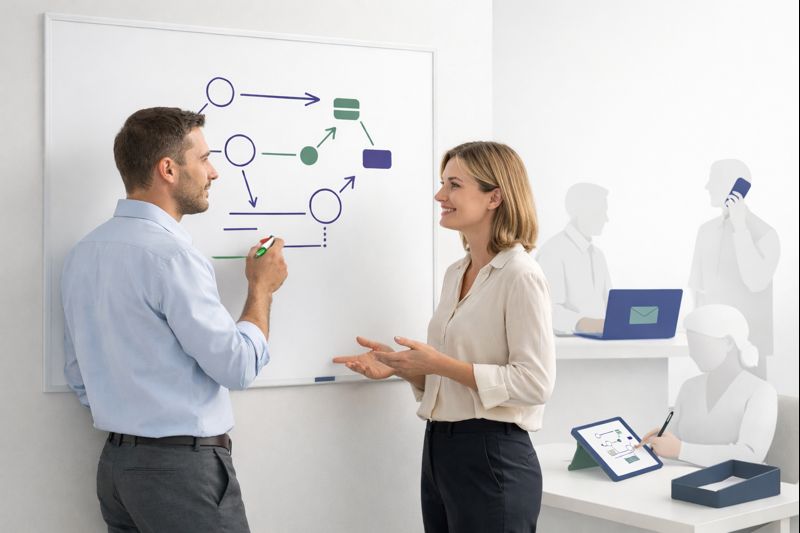
Relieve employees
AI relieves employees wherever time is currently lost due to searching, follow-up questions, repetitive tasks, as well as manual document and communication work – without any loss of quality or reliability. This creates space for value-adding tasks, reduces bottlenecks, and makes processes significantly more stable. The impact is immediately visible in day-to-day operations. We use […]
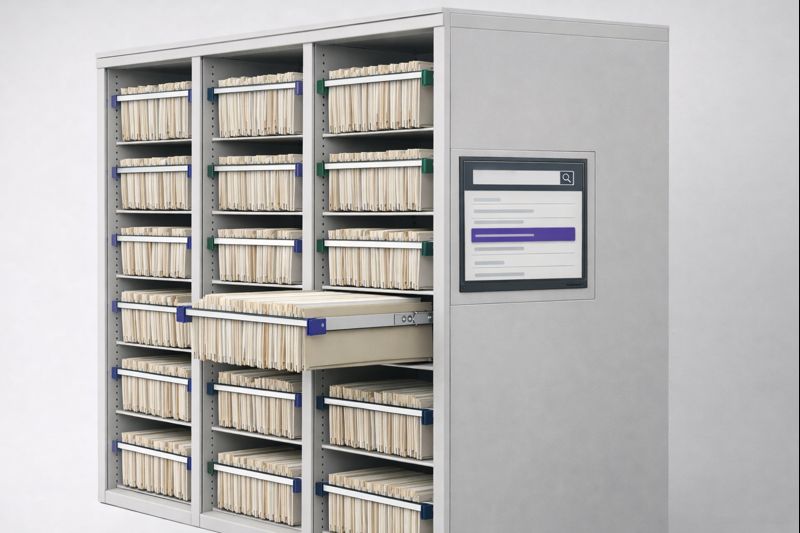
Making knowledge usable
Corporate knowledge only unfolds its value when it is available at the right moment as a reliable answer, decision-making aid, or concrete course of action. This reduces dependence on individuals, decisions are made more quickly, and the quality of results remains stable because knowledge is not searched for, but purposefully used. Vimmera AI brings together […]

Optimize business processes
Artificial intelligence can optimize and accelerate processes in companies by providing knowledge, rules, and context where decisions are made and work steps are carried out. Fewer errors, less rework, and more reliable, faster results. Especially in recurring but highly variable processes. Our systems support your processes where it pays off: Provide clear step sequences and […]

Improve service & communication
Vimmera AI uses AI specifically where communication is an essential part of the service. Employees receive quick access to relevant information, and support and service teams are assisted by structured response suggestions and context-related content.
Use automation sensibly
Vimmera AI enables companies to automate business processes in a targeted and controlled manner with the help of AI. The focus is not on isolated tools, but on clearly structured subprocesses that are integrated into existing systems and workflows. This reduces manual routine tasks, shortens throughput times, and increases the quality of results. Through intelligent […]