Optimize business processes
Artificial intelligence can optimize and accelerate processes in companies by providing knowledge, rules, and context where decisions are made and work steps are carried out.
Fewer errors, less rework, and more reliable, faster results. Especially in recurring but highly variable processes.
Our systems support your processes where it pays off:
Provide clear step sequences and decision logic in the context of the request. Keep documentation and standards consistent, reduce handovers and information gaps, and take over automated tasks when needed.

Accompanying and guiding processes
A central area is process support.
Vimmera AI systems can not only provide people with answers, but also actively guide them through work steps. For example, in service, administration, technology, or production.
Employees can have explained to them what needs to be done next, what to pay attention to, or what options are available. If desired, this even works entirely by voice. Ideal wherever hands are needed or quick interaction is required.
This reduces errors, makes processes more stable, and noticeably improves quality and safety.
Practical example: Processes & Documents
The benefits of Vimmera AI are particularly evident in document- and process-intensive areas of a company. In the past, documents had to be checked manually, information laboriously gathered, and content repeatedly reassessed. This was time-consuming, error-prone, and tied up valuable personnel resources.
Today, Vimmera AI helps to assign documents more quickly, automatically recognize content, filter out relevant information, and include similar cases or already existing knowledge. Uncertainties become visible at an early stage, missing information is detected, and work steps are sensibly prepared.
As a result, processes can be largely automated: forms can be completed automatically, data is transferred correctly, and workflows are intelligently controlled.
In addition, information can be specifically searched for, prepared in a structured way, and provided in the required form. Whether for specialist departments, decision-making bases, or customer communication. This makes processes more transparent, significantly shortens processing times, and results are more reliable and consistent at the same time.
At the same time, Vimmera AI helps to make complex information landscapes within companies manageable. Different departments, international teams, sensitive data sets, and countless documents can be securely structured, meaningfully linked, and made available at any time. All this without dependence on local storage or individual filing habits.
Knowledge is preserved, confidential content remains protected, and teams can work faster, more precisely, and much more efficiently.
Practical example: Documentation
A particularly tangible example can be seen in the area of documentation:
A service or sales employee has just come from a customer appointment, is on the way to the next assignment, and actually has no time to write a detailed report. In the past, this meant: collecting notes, reworking later, reconstructing information. With the risk that details would be lost or tasks would not be properly recorded.
Today, it is enough to simply speak freely into the system: What was discussed? What tasks arise? What agreements were made? Vimmera AI transcribes the voice input, automatically structures the content, assigns it to the correct processes, creates to-dos, assigns responsibilities, and files everything completely and neatly in the system. If information is missing, the system actively asks and thus ensures completeness and clarity.
In addition, structured summaries can be created in the shortest possible time based on this information.
This way, all parties involved are immediately informed, next steps are clearly documented, and tasks are clearly assigned. All this happens within a few minutes after a conversation, without much extra effort and without subsequent writing work.
Documentation is thus no longer perceived as an annoying duty, but becomes a natural part of the work process. Knowledge is preserved, transparency increases, and organizations benefit from up-to-date, complete, and reliable information.
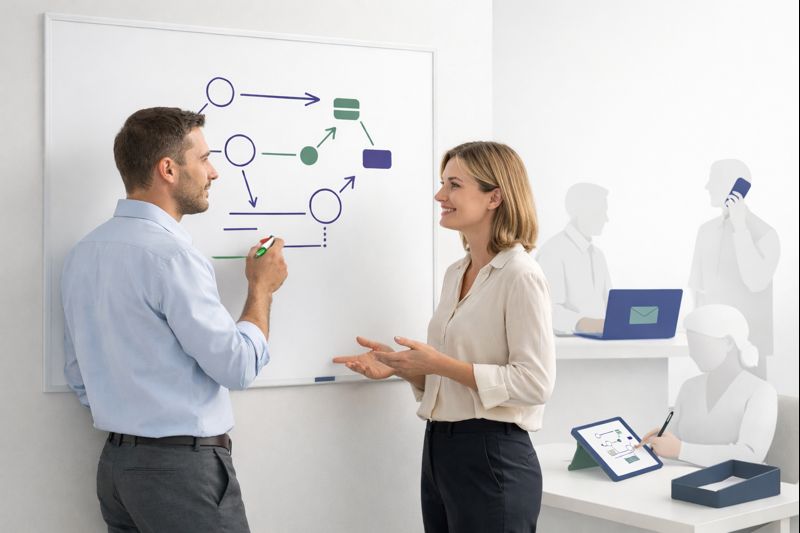
Relieve employees
AI relieves employees wherever time is currently lost due to searching, follow-up questions, repetitive tasks, as well as manual document and communication work – without any loss of quality or reliability. This creates space for value-adding tasks, reduces bottlenecks, and makes processes significantly more stable. The impact is immediately visible in day-to-day operations. We use […]
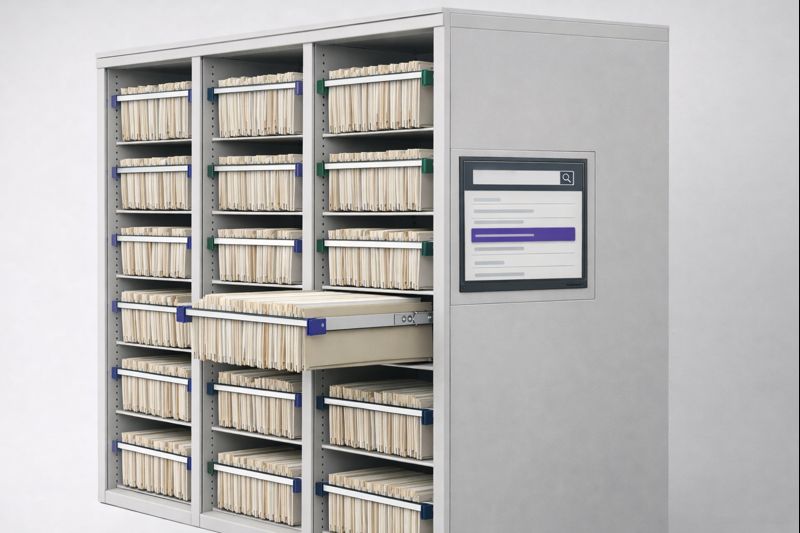
Making knowledge usable
Corporate knowledge only unfolds its value when it is available at the right moment as a reliable answer, decision-making aid, or concrete course of action. This reduces dependence on individuals, decisions are made more quickly, and the quality of results remains stable because knowledge is not searched for, but purposefully used. Vimmera AI brings together […]
Optimize business processes
Artificial intelligence can optimize and accelerate processes in companies by providing knowledge, rules, and context where decisions are made and work steps are carried out. Fewer errors, less rework, and more reliable, faster results. Especially in recurring but highly variable processes. Our systems support your processes where it pays off: Provide clear step sequences and […]

Improve service & communication
Vimmera AI uses AI specifically where communication is an essential part of the service. Employees receive quick access to relevant information, and support and service teams are assisted by structured response suggestions and context-related content.

Use automation sensibly
Vimmera AI enables companies to automate business processes in a targeted and controlled manner with the help of AI. The focus is not on isolated tools, but on clearly structured subprocesses that are integrated into existing systems and workflows. This reduces manual routine tasks, shortens throughput times, and increases the quality of results. Through intelligent […]