Making knowledge usable
Corporate knowledge only unfolds its value when it is available at the right moment as a reliable answer, decision-making aid, or concrete course of action. This reduces dependence on individuals, decisions are made more quickly, and the quality of results remains stable because knowledge is not searched for, but purposefully used.
Vimmera AI brings together existing content into a usable knowledge base. Documents, specialist systems, processes, and experiential knowledge are integrated, structured, and made accessible in their professional context. The systems do not work with pure keyword searches, but capture meanings, establish connections, and generate structured, traceable answers with clear source references. Access to this knowledge base is controlled according to roles and sensitivity, so that information is provided securely and in context.
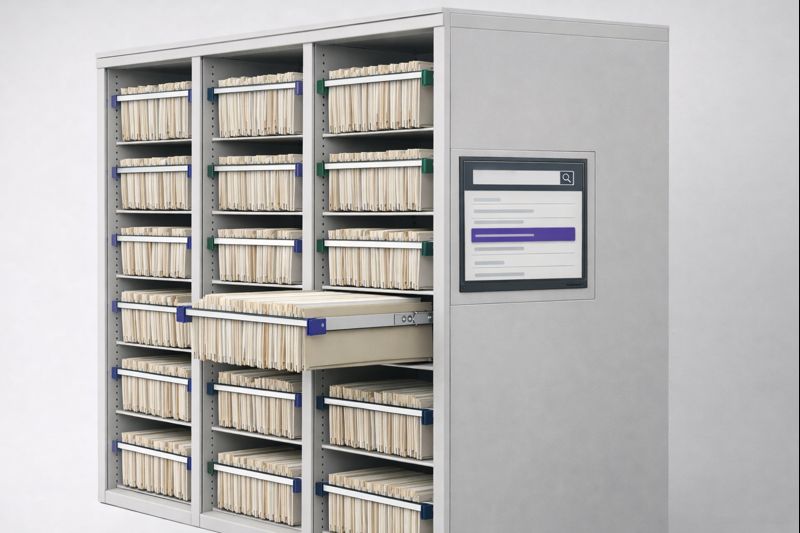
Use knowledge in a way that makes an impact
Corporate knowledge is the decisive factor for the performance of any AI-based solution. The quality and reliability of the results depend directly on how well this knowledge is captured, structured, and made usable. AI does not replace existing expertise, but makes it systematically accessible, combinable, and scalable. Only on this basis do answers, recommendations, and decisions arise that correspond to the level of human expertise.
A central component of Vimmera AI’s solutions is therefore the professional handling of corporate knowledge. The goal is to prepare information so that it is not lost, does not have to be laboriously searched for, and does not remain tied to individuals. On this basis, the systems support employees in their daily work, guide them through processes, provide recommendations for action, make connections visible, and help to complete tasks correctly, fully, and efficiently.
In Vimmera AI’s approach model, systematic work on corporate knowledge is at the center. In practice, relevant content is usually distributed across many sources, such as documents, guidelines, emails, ticket systems, training materials, technical documentation, or in the experiences of individual employees. Together with customers, these knowledge sources are identified, brought together, structured, cleaned up, and specifically supplemented. This creates a consistent, verified, and reliable knowledge base that can be controlled and reliably used by AI systems.
Access to this knowledge no longer takes place via searching for documents, but via concrete questions. Employees formulate their concerns, the system takes the context into account, asks follow-up questions if necessary, and provides a precise, understandable, and professionally sound answer. The underlying sources can be displayed as a reference at any time.
This also results in clear advantages for knowledge transfer and onboarding. New content, changes, or regulations are provided in a role-based, up-to-date, and consistent manner. Employees receive exactly the information they need and can ask follow-up questions or deepen their understanding of connections without additional training or manual coordination.
In addition, the knowledge base serves to sustainably secure know-how. Experiential knowledge, proven procedures, decision-making foundations, and professional connections are made permanently available and are retained even when staff changes occur. In this way, knowledge is not only preserved, but actively used, the organization becomes less dependent on individuals, and more powerful in the long term.

Relieve employees
AI relieves employees wherever time is currently lost due to searching, follow-up questions, repetitive tasks, as well as manual document and communication work – without any loss of quality or reliability. This creates space for value-adding tasks, reduces bottlenecks, and makes processes significantly more stable. The impact is immediately visible in day-to-day operations. We use […]
Making knowledge usable
Corporate knowledge only unfolds its value when it is available at the right moment as a reliable answer, decision-making aid, or concrete course of action. This reduces dependence on individuals, decisions are made more quickly, and the quality of results remains stable because knowledge is not searched for, but purposefully used. Vimmera AI brings together […]

Optimize business processes
Artificial intelligence can optimize and accelerate processes in companies by providing knowledge, rules, and context where decisions are made and work steps are carried out. Fewer errors, less rework, and more reliable, faster results. Especially in recurring but highly variable processes. Our systems support your processes where it pays off: Provide clear step sequences and […]

Improve service & communication
Vimmera AI uses AI specifically where communication is an essential part of the service. Employees receive quick access to relevant information, and support and service teams are assisted by structured response suggestions and context-related content.

Use automation sensibly
Vimmera AI enables companies to automate business processes in a targeted and controlled manner with the help of AI. The focus is not on isolated tools, but on clearly structured subprocesses that are integrated into existing systems and workflows. This reduces manual routine tasks, shortens throughput times, and increases the quality of results. Through intelligent […]